A New Year: A New Resolve, a Renewed Moral Compass for Public Health
“Auschwitz is outside of us, but it is all around us, in the air. The plague has died away, but the infection still lingers and it would be foolish to deny it. Rejection of human solidarity, obtuse and cynical indifference to the suffering of others, abdication of the intellect and of moral sense to the principle of authority, and above all, at the root of everything, a sweeping tide of cowardice, a colossal cowardice which masks itself as warring virtue, love of country and faith in an idea.” – Primo Levi, The Black Hole of Auschwitz
‘The world is all messed up. The nation is sick. Trouble is in the land. Confusion all around…….But I know, somehow, that only when it is dark enough, can you see the stars.’ -Martin Luther King, Last speech ‘I’ve been to the mountaintop’
‘We live in an age where billionaires dodge their taxes, politicians perform instead of govern, and media barons profit from lies and hatred. The Roman elite fiddled while Rome burned. Our elites live-streamed the fire and monetized the smoke. Immorality and unseriousness. Those are the two defining traits of our leaders today. And they’re not accidental flaws, but the logical outcome of what I call the survival of the shameless. Today, it’s not the most capable who rise, but the least scrupulous. Not the most virtuous, but most brazen.’ – Rutger Bregman, The moral revolution
Then let us pray that come it may,
As come it will for a’ that,
That Sense and Worth, o’er a’ the earth
Shall bear the gree an’ a’ that.
For a’ that, an’ a’ that,
It’s comin yet for a’ that,
That Man to Man the warld o’er
Shall brithers be for a’ that.
– Robert Burns –A man’s a man for a’ that
A new resolve
Friends, colleague, defenders of health!
Each January, we commemorate the Holocaust and the life of Dr. Martin Luther King Jr. Some of us celebrate on ‘Burns night’, the life and work of Scots’ poet Robert Burns.
The time to wish you a happy new year has long faded. This January, if not a month for new resolutions, has certainly been a month for renewed resolve.
Already in January 2026, we have moved into even darker times around the world. Martin Luther King told us that ‘only when it is dark enough, can you see the stars’. Primo Levi described an abdication of intellect and of moral sense. In his brilliant BBC Reith Lectures, Dutch Historian Rutger Bregman, calls for moral revolution.
The public health community, battered by moral distress and injury during the pandemic, must now rise to a new level of moral courage, to face down the multiple insults ranged against us. Deborah Morris and colleagues tell us addressing the moral harms is a public health imperative and associated solutions have a critical role to play in dampening the flames of current turmoil.
A renewed moral compass for public health
Is the public health community ready to step up to the moral challenge now facing us?
The rallying calls in the public health literature have been accelerating in recent years, calling us to action. European leaders prompted us that health is a political choice in 2024. Karatekin and others called for re-politicizing the WHO social determinants of health framework. American leaders celebrating 115 years of the American journal of Public Health, last year warned of multiple threats to public health policy and education, globally, and in the US. Last year, my colleague, Sebastian Levesque and I set out what we believe are the geopolitical forces dominating our world today, destroying our health now, and threatening more devastation for the future. Martin Mckee, Josep Figueres, Ashish Joshi, Ramune Kalediene, Laura Magaña and others set out why the public health community must develop our skills in public health diplomacy. We must critically examine our understanding of ethics and law, as so beautifully set out in the journal of public health ethics supplement, edited by Farhang Tahzib, just published. The new public health ethics and law (PHEL) network webpages will soon be housed on the GNAPH website HERE and we must reassert our ethical values in the climate of geopolitics we find ourselves in.
Courage in dark times for the public’s health
Above the ethical and the professional, is also the moral. We must commit to our science, to improve and protect the people and planet…
Is public health just a technical exercise? Or is it a vocation? A profession? A service? And beyond the roles expected by society, to be involved in public health has always required personal commitment and personal courage, and never more so than now.
In my presentations to the Polish public health authorities last year, I talked about courage in dark times for the public health. The Lancet’s 2025 highlights provides pictorial inspiration and admiration for the struggles and achievements of the global health community.
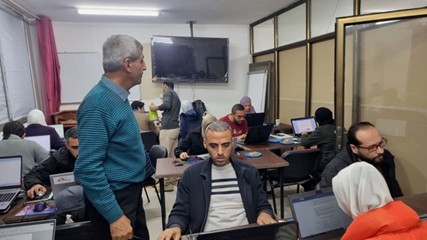
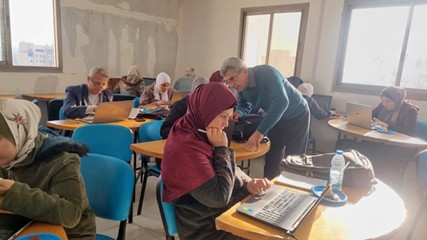
There can be very few brighter beacons of courage and commitment than our public health educators in Al Quds University campus in Gaza. They have started teaching on campus, and in January, have recommenced examinations. Professor Dr. Bassam Abu Hamad, Director General of Programs of the College of Public Health – Gaza Branch, affirmed that the return of the face-to-face exams represent an important milestone in the College of Education’s career, and a message of hope and resilience that confirms the continuation of the academic process and service to the students. Bassam, and colleagues, we salute you!
Principled and pragmatic, a moral revolution?
In his much-praised speech at Davos, Mark Carney said that Canadians are ‘no longer relying on just the strength of our values, but also on the value of our strength’. He called for a new approach of the medium sized powers, to develop ‘values-based realism- aiming to be principled and pragmatic’.
Bregman seems to call for something similar in civil society. He calls for a new “realist utopia”, promoting ideas like Universal Basic Income, fairer taxation, and responsible tech regulation in the face of rapid technological change. He builds a compelling picture-of how apparently unsurmountable tyrannies and vested interests in destruction and in torture can be overcome. He urges privileged individuals to take on an active role in shaping a better future. It sounds like an agenda for the health of the people.
He echoes Margaret Mead, arguing that small, committed groups can spark moral revolutions. Is the public health community ready to rise to these challenges: to build a movement of the virtuous and a moral revolution?
Solidarnosi!
The opinions expressed in this post are solely those of the author and do not necessarily represent the views of GNAPH or its members.
Read these:
- Middleton J, Levesque S. Geopolitical health: a new imperative for understanding the health of the people we serve. JGPOH 2025, posted: 06.08.2025. DOI:10.61034/JGPOH-2025-11
- McKee M, Figueras J, Kalediene R, Joshi A, El-Mohandes A, Otok R, Magaña L, Marchandise C and Barros H (2025) An Agenda for Public Health Diplomacy in an Age of Populism. Public Health Rev. 46:1609089. doi: 10.3389/phrs.2025.1609089 https://www.ssph-journal.org/journals/public-health-reviews/articles/10.3389/phrs.2025.1609089/full
- Farhang Tahzib, Ethics, values, and law for public health in a world in turmoil, Journal of Public Health, Volume 47, Issue Supplement_1, December 2025, Pages i1–i4, https://doi.org/10.1093/pubmed/fdaf146
- John Middleton, Sebastian Levesque, Geopolitical influences, public health values, and ethics, Journal of Public Health, Volume 47, Issue Supplement_1, December 2025, Pages i8–i12, https://doi.org/10.1093/pubmed/fdaf093