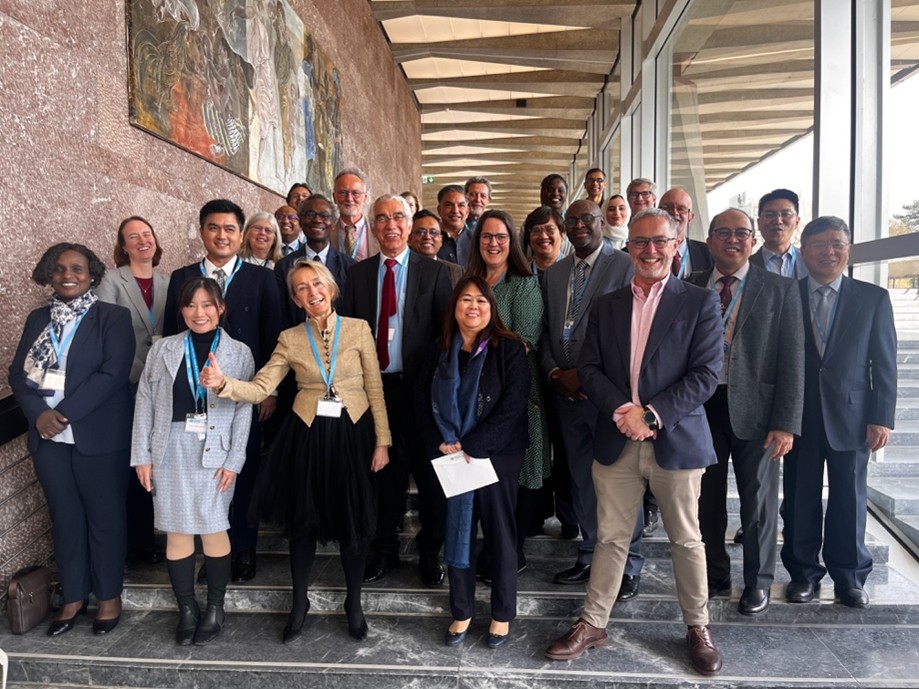
WHO 5th steering group photo march 24th 2026
The fifth steering group meeting of the WHO roadmap for public health workforce including emergencies
In March this year, public health experts convened at the WHO headquarters in Geneva for the 5th steering group meeting of the WHO roadmap for public health workforce including emergencies. GNAPH has been strongly involved in this work, from early discussions with Jim Campbell and the WHO health workforce team in 2021, through the 1st steering group meeting in October 2022. The reports of the steering group were adopted at the World Health Assembly in 2024. By 2025, further WHA resolutions gave impetus to the need to support and invest in public health training and capacity building. The full collection of WHO National Workforce Capacity for EPHFs documents can be found here.
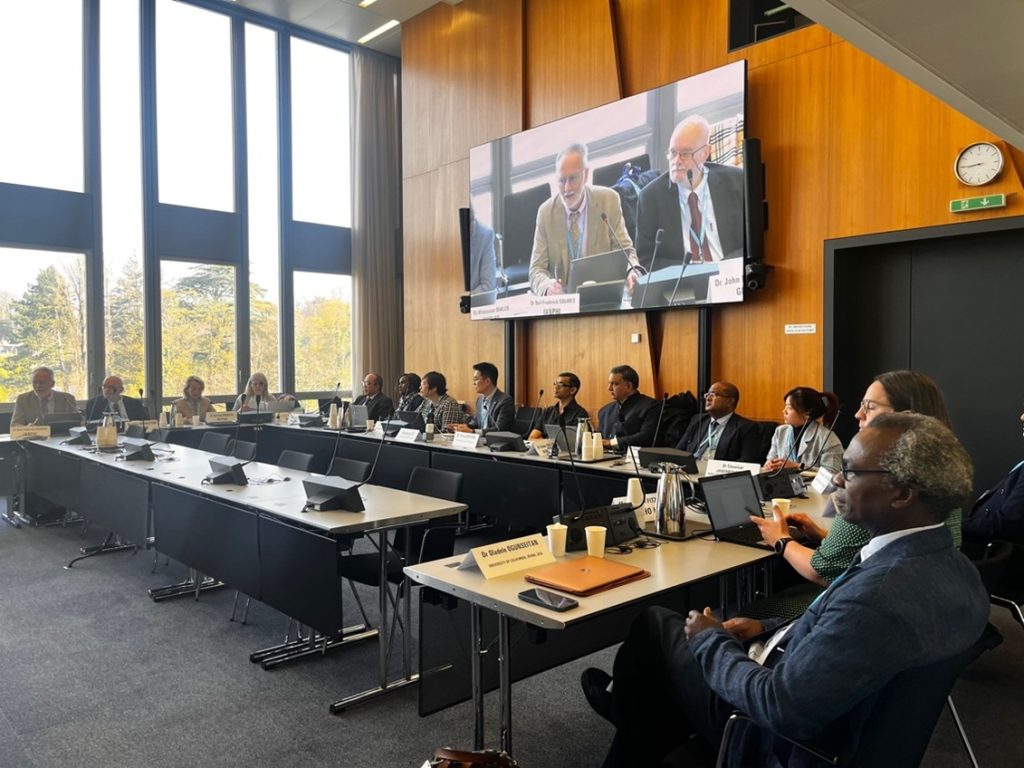
Over two days, the Geneva meeting received progress reports from a wide range of national initiatives and from international public health partners, including GNAPH, the World Federation of Public Health Associations (WFPHA) and the International Association of National Public Health Institutes (IANPHI).
Public health workforce roadmap progress
The Public health workforce roadmap steering group workings have involved over 70 partners from public health associations, institutions, schools and academic departments. Workforce development operations are now happening in around 150 countries, covering greater than 90% of the world’s population.
In his introductory presentation, Sohel Sakhet, for the WHO health workforce team, described how the roadmap seeks to build on national policies, plans, investments and capacities – encouraging inter-agency cross-divisional, multi-disciplinary approaches to public health workforce strengthening. Expansion of public health capacity is needed covering protection, promotion, prevention and public health emergency management.
The roadmap identifies three priority action areas for growing the public health workforce: defining the essential public health functions and services (EPHFs), competency-based education, and the mapping and measurement of occupations.
The essential public health functions (EPHFs)
The road map deploys the revised 12 Essential Public Health functions proposed in 2021 through the work of Professor Jose Martin-Moreno. A major review of functions used across the world found strong consistencies in terms such as health protection, health promotion and health intelligence, but less consistency in relation to public health skills and approaches applied in health and social care settings. The 12 EPHFs clearly now include universal health care, clinical effectiveness and safety, preventive medicine, and supply chain issues, essential drugs and treatments.
A strong platform for growing the public health workforce: the 2025 World Health Assembly 78 resolutions and the 14th WHO Global Program of Work (GPW14)
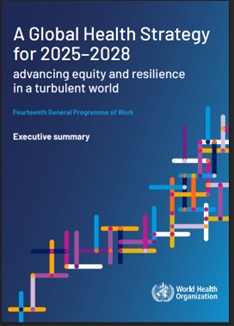
Cover image from: A Global Health Strategy for 2025–2028. World Health Organization, 19 May 2025.
The 2025 WHA resolutions gave impetus to the need to support and invest in public health training and capacity building. Accelerating action on the global health and care workforce by 2030, was a vital contribution to this. In its recommendation to member states and partners, there was general emphasis on workforce education, training, safe, fair working and capacity building. The specific requests to the Director General at para 2 and 5 are of particular interest to the public health community:
‘(2) to accelerate the provision of support to Member States, upon request, on the implementation and monitoring of the global strategy on human resources for health: workforce 2030, to promote investments in education, training, employment and retention of the health and care workforce, to accelerate progress towards meeting target 3.c of the Sustainable Development Goals, and to strengthen capacities to prevent, prepare for and respond to public health emergencies, including workforce surge capacity during public health events, with a special focus on countries and regions facing the most critical health and care workforce challenges, providing technical and methodological support for rebuilding and strengthening the health workforce in countries impacted by conflicts and the loss of professional staff;
‘(5) to provide support to countries, in collaboration with associations, institutions and schools of public health, to implement technical guidance and tools to strengthen workforce capacity to deliver essential public health functions, including health emergency prevention, preparedness and response, and the implementation of the International Health Regulations (2005), building on existing initiatives to strengthen availability, accessibility, acceptability and quality of a skilled, trained and multidisciplinary global health emergency workforce while ensuring a safe and healthy working environment;’
Laying the foundation for these resolutions, was the earlier ‘A global health strategy for 2025-2028’, the 14th WHO Global Program of Work (GPW14), approved at the 2024 WHA. The World Health Pandemic Agreement further adds to the momentum for public health capacity building. Article 7, Health and care workforce item 1 says:
“Each party, in line with its respective capacities and national circumstances, shall take the appropriate measures with the aim to develop, strengthen, protect, safeguard, retain and invest in a multidisciplinary , skilled, adequate, trained, domestic health and care workforce to prevent, prepare for and respond to health emergencies, including in humanitarian settings, while maintaining essential health care services and essential public health functions at all times and during pandemic emergencies.”
Together, these resolutions and plans give public health a strong platform on which to build, to protect and improve health globally.
There have also been important technical developments regarding workforce development for effective management of zoonotic disease and with the Global Health Emergency Corps.
Country actions towards implementing the public health workforce roadmap
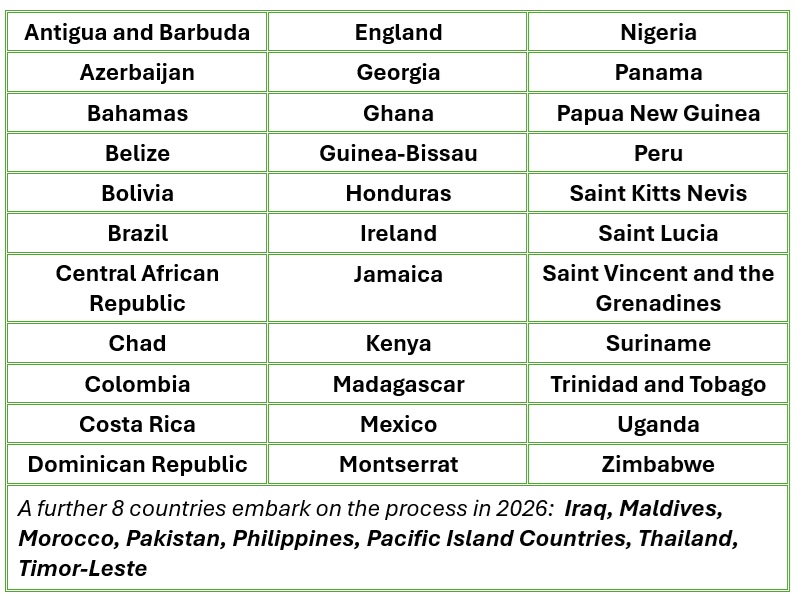
34 countries have done benchmarking for at least one action area of the roadmap so far and are progressing with roadmap implementation. These are shown in the table (1):
There were inspirational country presentations from the very small – Montserrat – to the enormous – China – with Chad, Portugal, Italy and South American countries in between. They were all characterised by commitment and ambition. Needs analysis has been undertaken or is planned in all the country examples.
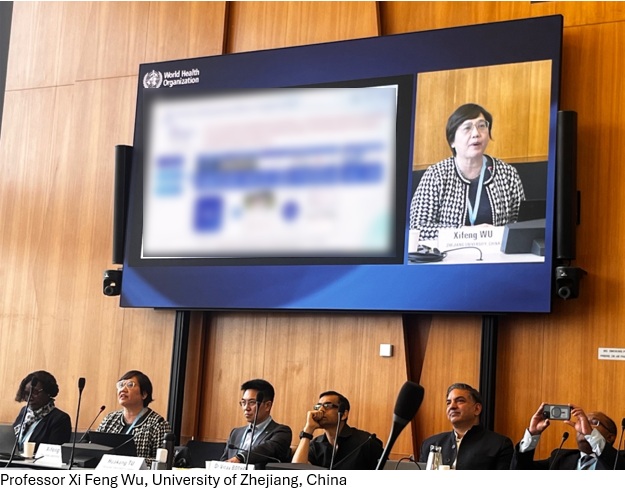
Montserrat is working with a very small health and care staffing and seeking to retrain, upskill and share tasks, serving the island’s 8500 people. Chad is adopting a One Health approach to cover environmental, agricultural, water management, health and veterinary risks. Country summaries are available on request. Italy’s needs assessment has led to a wide range of e-learning modules being delivered at scale. China is seeking to expand its public health workforce massively and therefore grappling with how to maintain and raise teaching and service delivery standards. Professor Zifeng Wu from Zhejiang university presented four major commitments: the Chinese Disease surveillance and early warning system; the Healthy Zhejiang one million people cohort study for chronic disease control; the 101 plans for public health and preventive medicine majors; and implementing the WHO workforce development road map in China and other public health interprofessional leadership alliance (PHILA) countries. Professor David Makram Bishai from Hong Kong University set out complementary plans and actions for a consortium of Chinese schools and commitment to work collaboratively with other initiatives in the Asia Pacific region.
In the Americas, 17 countries have conducted assessments of their institutional capacities to implement EPHFs, 10 countries have developed action plans to close identified gaps in capacities; there are variable levels of implementation of findings in health policies, plans and actions, at national and local levels. RedFESP is a group of countries, the Red sobre Funciones Essenciales de Salud Para fortalecer la rectoria y gobernanza, that are working on essential health functions to strengthen leadership and governance. This involves Bolivia, Costa Rica, El Salvador, Mexico, Panama, Peru, Dominican Republic, and Uruguay.
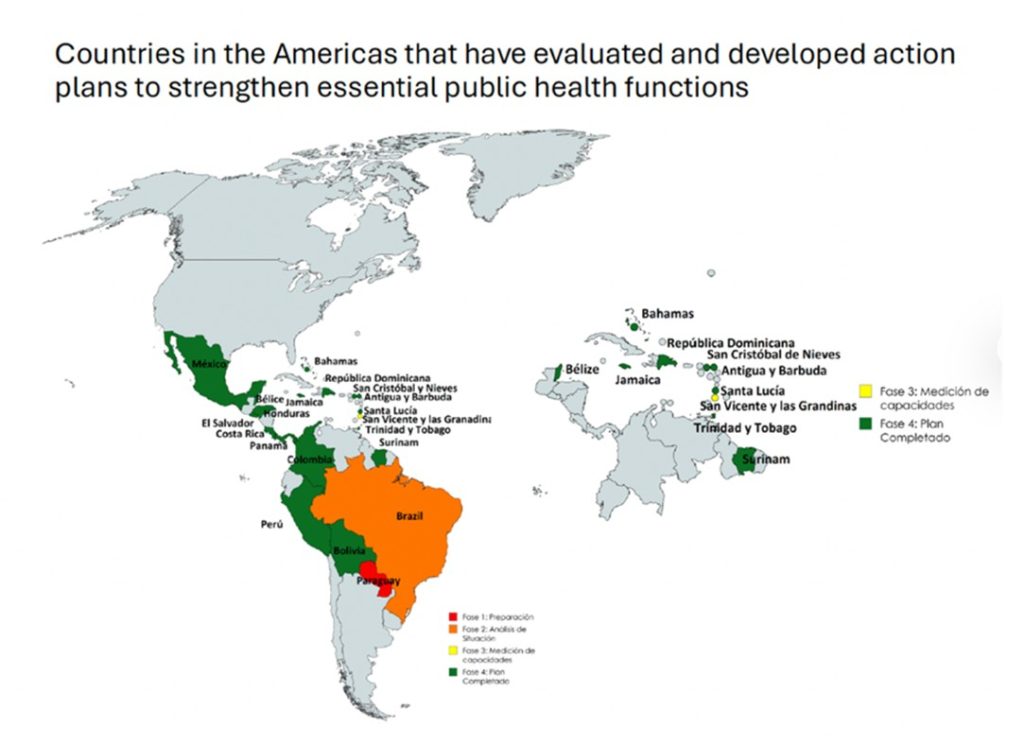
Pan American Health Organization (PAHO). Implementation of the Essential Public Health Functions in the Americas: Evaluation and Strengthening of Capacities [webinar presentation]. Primary Health Care Webinar Series, 15 April 2025. Primary Health Care and Integrated Service Delivery / Health Systems and Services.
Source: https://www.paho.org/es/documentos/redfesp-folleto-informativo
WHO technical programmes
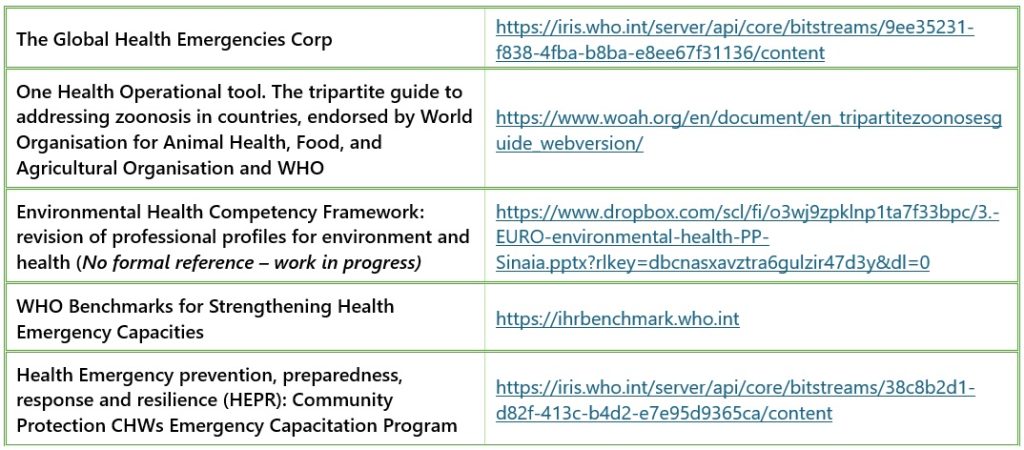
WHO technical programmes which are assisting objectives of the WHO Public Health and emergencies road map were presented including those in the table (2) below:
I found our meeting at WHO in March uplifting and inspiring – I will reflect on this in part 2 of the blog….