


The Climate and Health Communities of Practice (CoPs) are regional, faculty-led learning collaboratives designed to support public health educators in integrating climate and health into teaching and curricula. Building on the Climate-Ready Classrooms faculty development course, the CoPs will provide a structured, practice-oriented space for faculty exchange ideas, develop materials, and advance climate-health education in ways reflective of regional priorities and institutional contexts.
What is a Regional Community of Practice (CoP)?
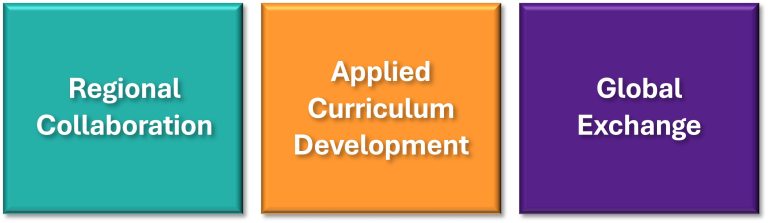
Each regional CoP brings together faculty from GNAPH member institutions for a facilitated series of virtual sessions focused on practical integration of climate and health content into public health education. Through peer exchange, reflection, and applied curriculum development, participants will work to strengthen teaching materials, map climate-health content into courses, and identify strategies for institutional change. Each CoP is hosted through one of GNAPH’s regional member associations, allowing the program to remain globally connected while grounded in regional priorities, languages, and educational contexts.
Why Climate and Health?
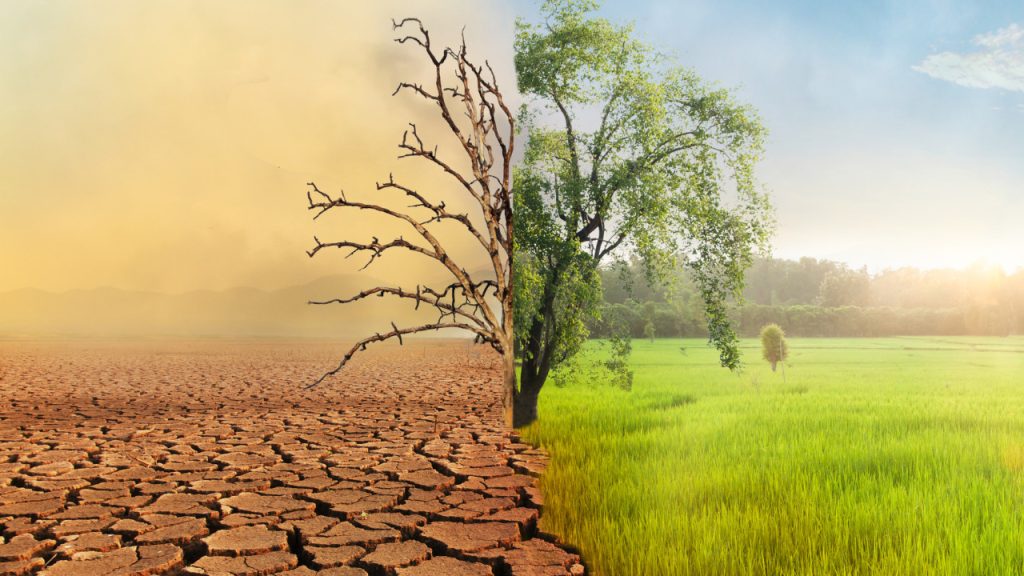
Climate change is increasingly shaping the global burden of disease, the resilience of health systems, and the competencies required of the public health workforce. Recognizing climate and health as a major priority, GNAPH is working to support public health educators in integrating these issues more systematically into teaching and training. The Communities of Practice are one way GNAPH is advancing that goal through curriculum integration, regional exchange, and practical strategies for institutional change.
Program at a Glance
- Virtual, regional faculty-led sessions
- Multi-month program across GNAPH regional associations
- Built on prior climate and health faculty development coursework
- Curriculum integration, teaching practice, and institutional change
- Regional collaboration plus cross-regional exchange opportunities
CoP Session Themes
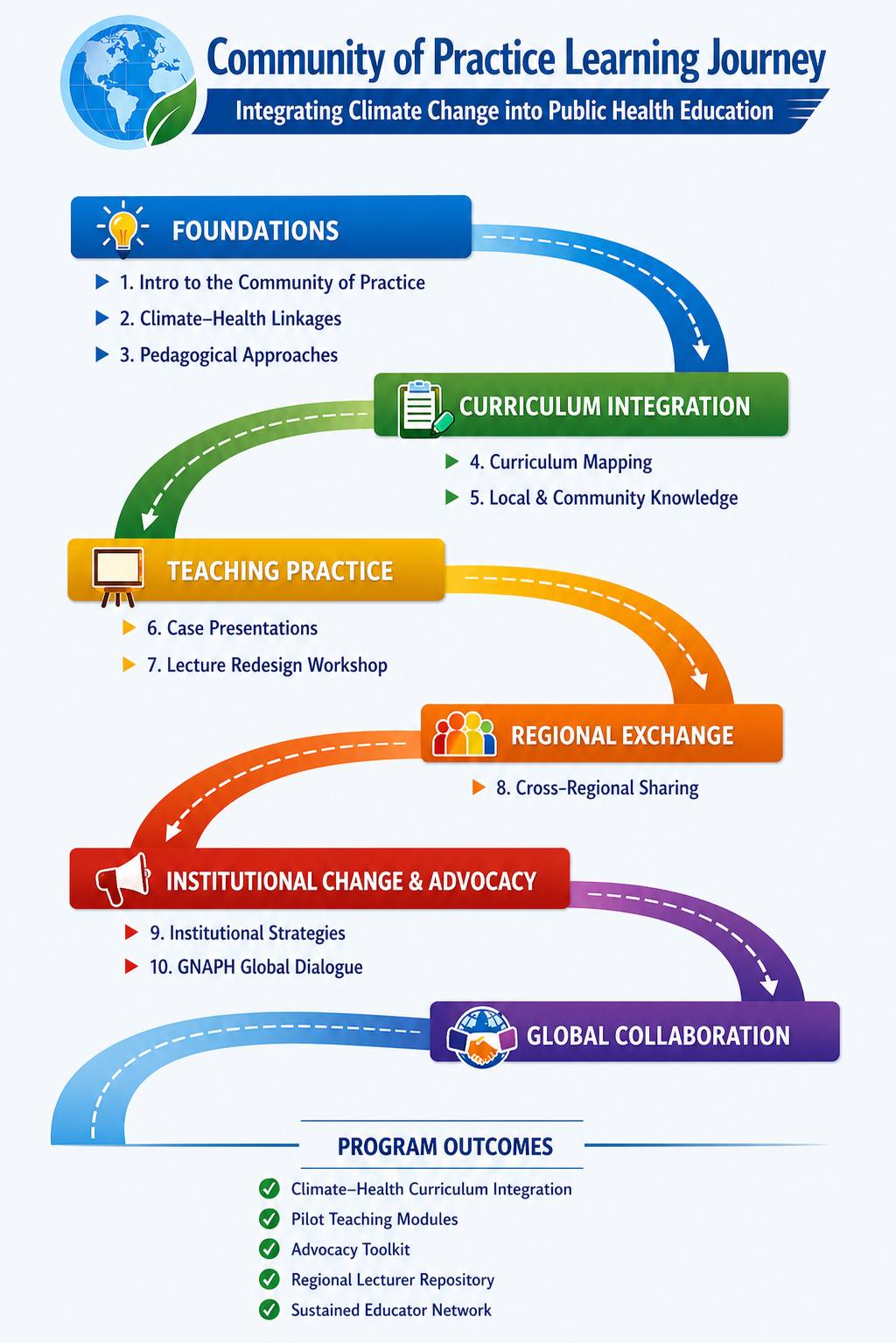
Across ten sessions, participants will explore the following central themes:
Foundations of Climate-Health Education
Why climate belongs in public health education and how climate-health issues connect to local and regional realities.
Curriculum Integration
Approaches to mapping, embedding, and strengthening climate-health content within existing courses and programs.
Teaching Practice
Practical strategies for designing lectures, case studies, and other teaching materials that build climate-health competencies.
Regional Exchange
Opportunities for faculty within and across GNAPH regions to share examples, lessons learned, and educational approaches.
Institutional Change and Advocacy
Discussion of barriers, opportunities, and strategies to advance climate-health education more broadly within institutions.
Outcomes and Deliverables
At the conclusion of our time together, participants will have worked to produce:
Curriculum and syllabus integration plans
Pilot teaching materials such as lectures or case studies
Shared resources and examples across regions
Contributions to broader advocacy and institutional change efforts
A stronger global network of climate and health educators
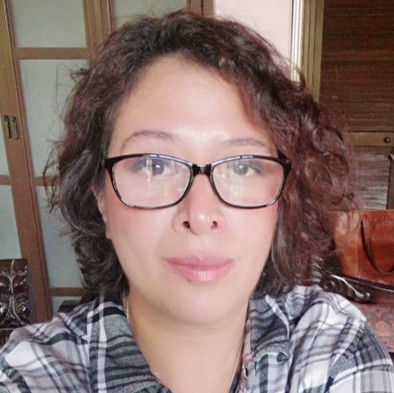
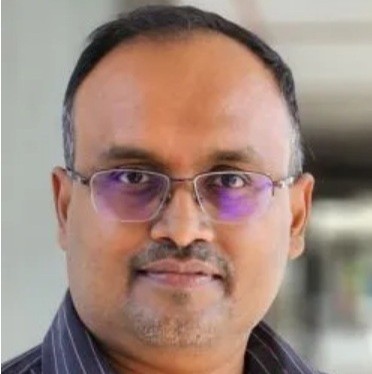
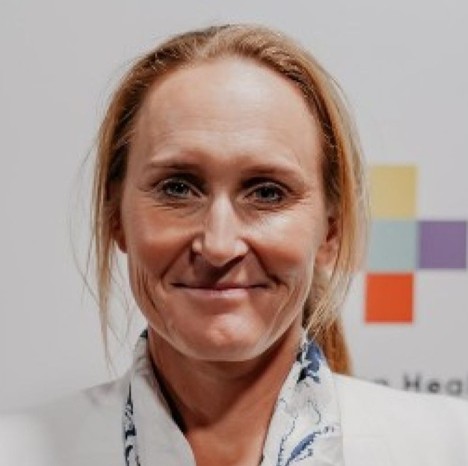
Meet the Regional Faculty Leads
Dr. Grea Litai Moreno Banda
Instituto Nacional de Salud Pública
ALASAG
Dr. Bala Murali Sundram
University of Malaya
APACPH
Dr. Sean Patrick
University of Pretoria
ASPHA
Tara Chen
University of Waterloo
ASPHER
Dr. John Clements
Michigan State University
ASPPH
Dr. Rebecca Patrick
University of Melbourne
CAPHIA
Dr. Goutam Sadhu
IIHMR University
SEAPHEIN
Developed in Collaboration
The CoPs build on the Climate-Ready Classrooms faculty development course and related GCCHE efforts to support practical, context-sensitive climate and health education across academic public health.
Stay tuned! We look forward to sharing highlights and emerging resources as the Communities of Practice unfold around the globe.