Lessons from the World Health Summit in October
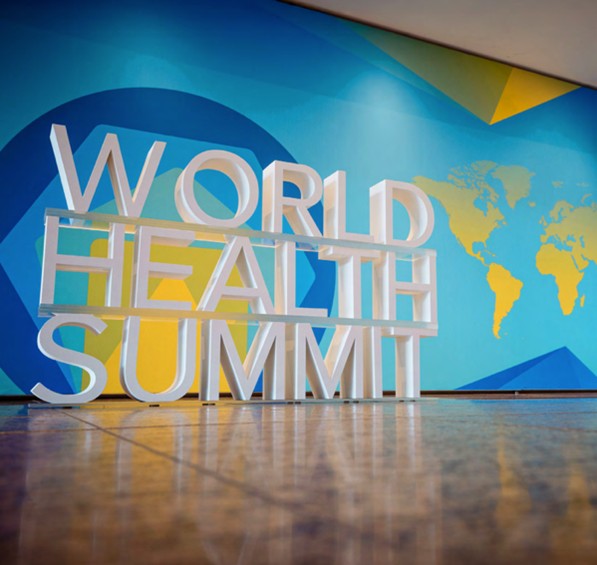
In October, Laura Magaña and I attended the World Health Summit (WHS) in Berlin. Before this we joined the World Health Academic Alliance Council for discussion of its activities over the last two years and plans going forward. (Figure 1) Colleagues reflected on the success of the 2024 New Delhi WHS Regional Congress. The 2026 WHS Regional congress will be held in Nairobi. This promises to be an inspirational meeting for the health of African people, and for the rest of the world. Details here.
The alliance launched its statement on academic freedom, recently published in Nature Medicine. Members of the Alliance, including President of WHS Prof Dr. Axel Pries, highlight the importance of free science and global partnerships to achieve worldwide health goals. The alliance believes we must define, respect and safeguard academic freedom, strengthen international collaboration and multilateral institutions, and combat misinformation and rebuild trust in science. As stated in the declaration, “Without academic freedom and genuine international cooperation, we cannot overcome global health challenges.” They might almost have had in mind the science-free assertion placed on the CDC website concerning the discredited relationship between vaccination and autism. The World Health Organisation, the European Medicines Agency, the European Public Health Association, and the US National Academies are amongst the scientific bodies fighting to stem this new absurdity in evidence-lite advice to the public and the clear and present danger it presents to the health of our children and communities…
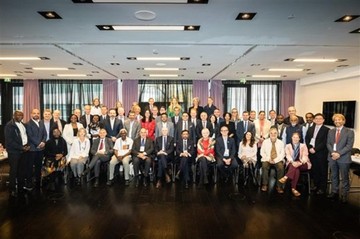
Fig. 1 World Health Summit Academic Alliance Photo: © World Health Summit
The WHS has now published the summary report of major achievements from the meeting. The German government announced a commitment of €1 Billion to the Global Fund to combat AIDS, Tuberculosis, and Malaria. It has also pledged a further €100 Million towards the Coalition for Epidemic Preparedness Innovations, CEPI, to enhance vaccine preparation and pandemic preparedness. The European Union has announced €8 Million towards a new joint digital project with WHO to advance health system transformation in sub-Saharan Africa.
A particular highlight from the Summit for me was the Global Burden of Disease (GBD) Study 2023 launch, featured in a previous blog post. The launch of the Global Preparedness Monitoring Board 2025 report was also outstanding, giving me the impression of multiple coherent and coordinated, multidisciplinary scientific collaborations for surveillance and early intervention, enhancing speed of detection of new pandemic risks and capacity to respond. The report also, however, recognizes the need to enhance political systems and understanding by adopting three key pillars – care, measure, and cooperate – to drive preparedness for pandemics, epidemics, and outbreaks in a volatile world.
We were joined at the WHS by Margaret Kaseje, President of the Association of Schools of Public Health in Africa (ASPHA). We participated in a meeting convened by the International Association of National Public Health Institutes (IANPHI) in partnership with the World Federation of Public Health Associations (WFPHA) and GNAPH. The meeting was entitled “Mobilizing Global and National Public Health Assets to Build a Resilient and Sustainable Global Health Architecture,” and discussed how public health institutes, agencies, schools, and networks can collaborate in support of strengthened public health and health security. We are grateful to Duncan Selbie, President and Neil Squires, Chief Executive of IANPHI for sponsoring the meeting and to Khassoum Diallo, World Health Organisation, and Bettina Borisch, CEO of WFPHA for their contributions. (Figure 2)
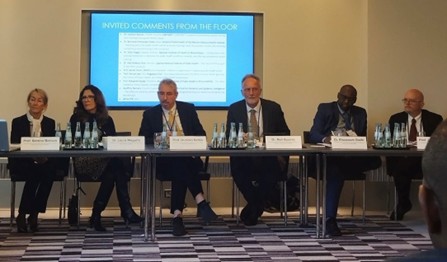
Fig 2. Advocating for change in the global health architecture – partners in global health: from L to R : Bettina Borisch, CEO WFPHA; Laura Magana, GNAPH, Immediate Past President; Duncan Selbie, President, and Neil Squires, CEO, IANPHI; Khassoum Diallo, WHO; John Middleton, GNAPH President.
Photo: © World Health Summit
There were inspiring presentations of public health educational developments in Mozambique, Uganda and Kenya, Singapore, Mexico, the Middle East and Pakistan, which we plan to write up more formally soon. Health is global; no one country or region, or former empire, has a monopoly on the knowledge or the resources we need for people and planet to survive. We must recognize the innovative and imaginative work being done around the world, learning from the efforts of colleagues working courageously and selflessly, in difficult and dangerous situations, often with minimal resources. We must celebrate their work and adopt their best practices. I tell my students to look East and south for their inspiration. This has been particularly the case since the pandemic.
In November, my government published the 2nd report of the COVID19 inquiry (Hallett report) which demonstrates the monumental failures of the British government in the pandemic, including the “lost month” of February 2020, 23,000 lives lost in the first wave, more than 230,000 overall, monstrous corruption in the “VIP lane” of PPE procurement, and the ‘do as I say, not as I do’ behaviours of people in power.
In the next part of this blog I will reflect on the past month, where climate has dominated global health deliberations in a climate of despair…or a climate of hope? To be continued….
The opinions expressed in this post are solely those of the author and do not necessarily represent the views of GNAPH or its members.
Photos © World Health Summit. Used with permission. The photos may be used free of charge if the copyright World Health Summit is acknowledged. The use for party-political events or publications and transfer to third parties is not permitted. Commercial use requires prior written agreement with the World Health Summit.