PART 2: Lessons for me, and for the Global Network for Academic Public Health
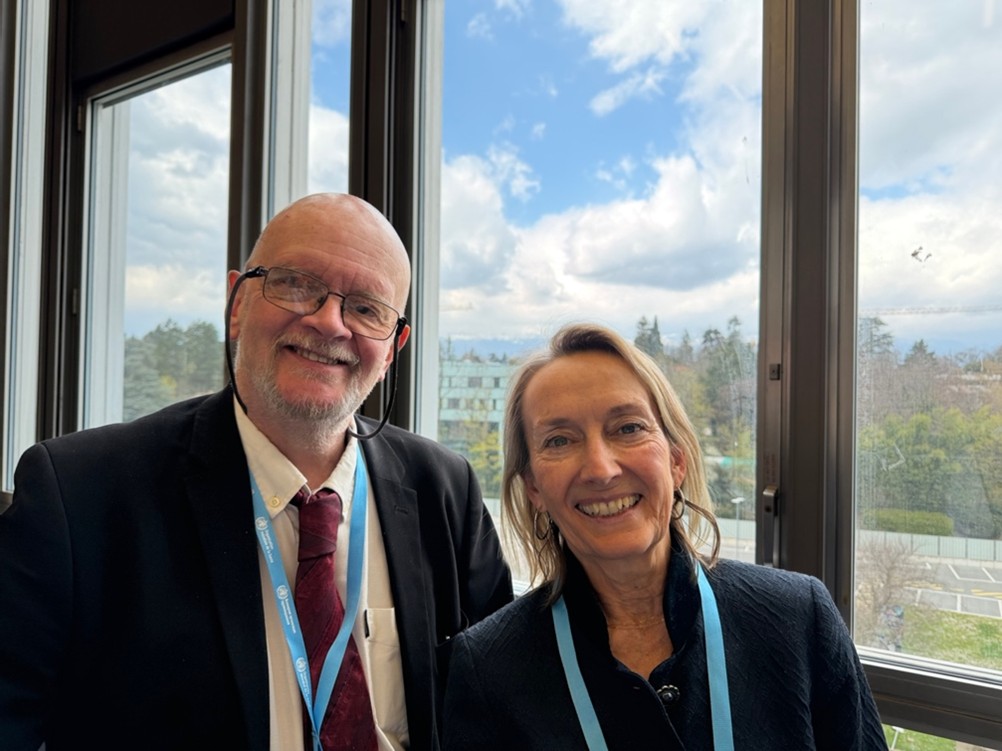
GNAPH President John Middleton, with World Federation of Public Health Associations, Chief Executive officer, Professor Bettina Borisch. GNAPH and WPFHA lead a group of global health organisations implementing the competencies and outcomes framework
Overwhelmingly positive and optimistic impressions
For me, the 5th steering group meeting for the WHO Roadmap was extremely important and inspiring. The work it presented, and the actions it demands are central and essential to what we have to do. Our Global Network of Academic Public Health, GNAPH, has set out its stall from the start. In our opening statement in 2021, we set out why public health science, research, and teaching were essential to protect and improve the health of people and planet. Public health workforce is our FIRST priority – a bigger workforce, a skilled and knowledgeable workforce, and an effective workforce able to get policies and programmes in place that will really save lives, reduce ill health and disability, and improve quality of life in a safer, more equitable and sustainable environment and economy. That workforce will also be driven by a sense of service, vocation, and professionalism.
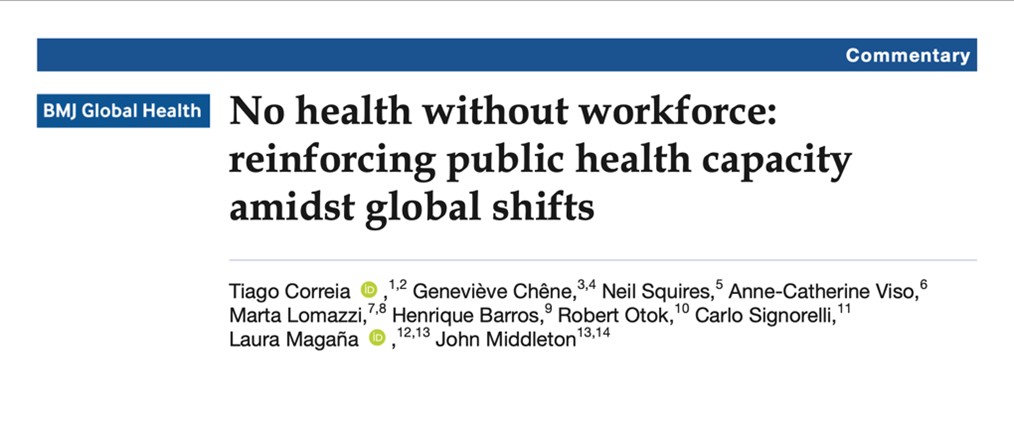
Correia T, Chêne G, Squires N, Viso AC, Lomazzi M, Barros H, Otok R, Signorelli C, Magaña L, Middleton J. No health without workforce: reinforcing public health capacity amidst global shifts. BMJ Glob Health. 2026 Apr 24;11(4):e020402. doi: 10.1136/bmjgh-2025-020402. PMID: 42031415; PMCID: PMC13110575.
No health without workforce
There is much still to be done to grow and develop the public health workforce, to be able to get science into policy and practice. Coinciding with the Geneva meeting Tiago Correia and colleagues have published a manifesto for the public health workforce, ‘No health without workforce’ I strongly commend this to you. It will drive our actions to ensure a quality public health workforce grows. Its main conclusions are shown below.
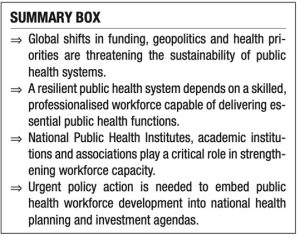
The Action area 2 -competencies and outcomes group: the ‘AA2 group’
GNAPH and the World Federation of Public Health Associations (WFPHA) lead a group of global health organisations who are overseeing implementation of the competencies and outcomes toolkit for the roadmap. Our action plan 2025-2026 was published last September. We are bringing on other colleagues and partners who are active in workforce development, competence and curriculum.
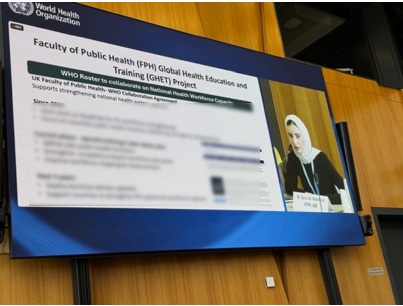
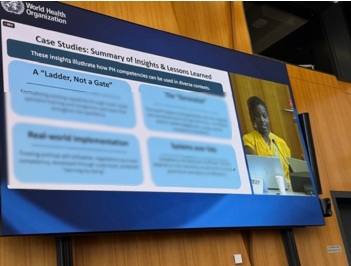
At the Geneva meeting, my colleagues from the United Kingdom Faculty of Public Health (UKFPH), Mina Endeley and Sara Al-Khafaji presented current thinking around the UK FPH review of curriculum and their efforts to incorporate WHO essential public health functions and the competencies and outcomes framework. We will be seeking to continue discussions with the UK to see how this might be a case study of good practice for the AA2 group.
Advocacy for more and better public health training programmes
We should take courage, and collective resolve that so many countries in the world are seeking to learn the lessons of the pandemic and invest in their public health training, services and systems.
The task is still enormous- as Professor Salman Rawaf, from Imperial College London, challenged us: How many countries of the world have a dedicated training programme and career structure, even for specialist public health? Maybe 20? We need more data for sure, but decision makers and funders will need to understand the need, and the benefit of having a trained public health workforce.
Support WHO colleagues, support the WHO
I was heartened by the commitment of colleagues in WHO, who have been battered personally, professionally, and organisationally, over the last year, often without just cause, and with little possibility to respond. They are showing considerable resolve and professionalism and carrying on with the day job- doing their level best to protect and improve the health of our global citizens. As I said in my introductory remarks to the meeting, ‘if we didn’t have a World Health Organisation, we would have to invent one’. It is a theme repeated in papers by the European Schools of public health.
Even now, with the current Hanta virus incident, we are seeing just how true that is. How much more so when the health and safety of the entire planet is at stake. We must have ambition for a better World Health Organisation, and for a bolder, confident, professional armoury of global health agencies, capable of protecting and improving the health of people and planet. The current state of geopolitics confirms for us that we must seek better global governance, accepted by all our national leaders, if our species is to survive.