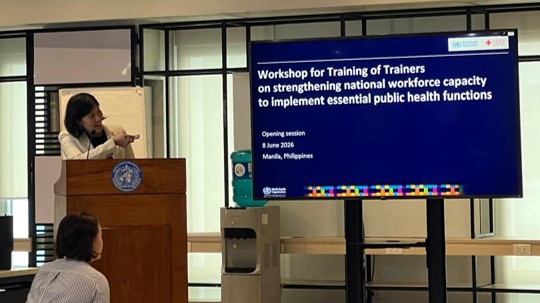
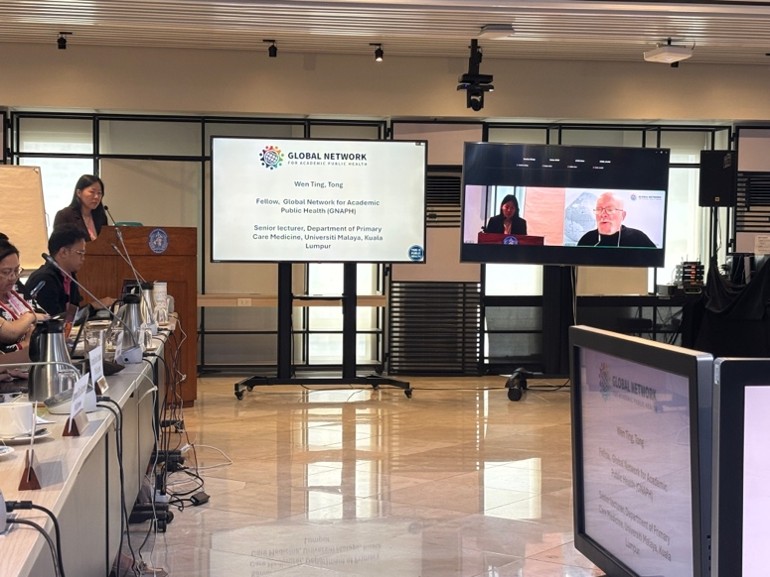
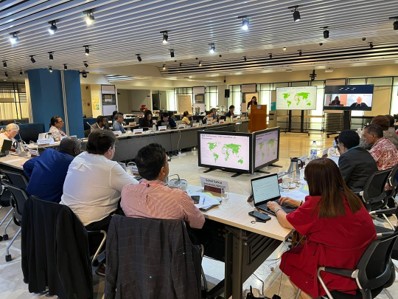
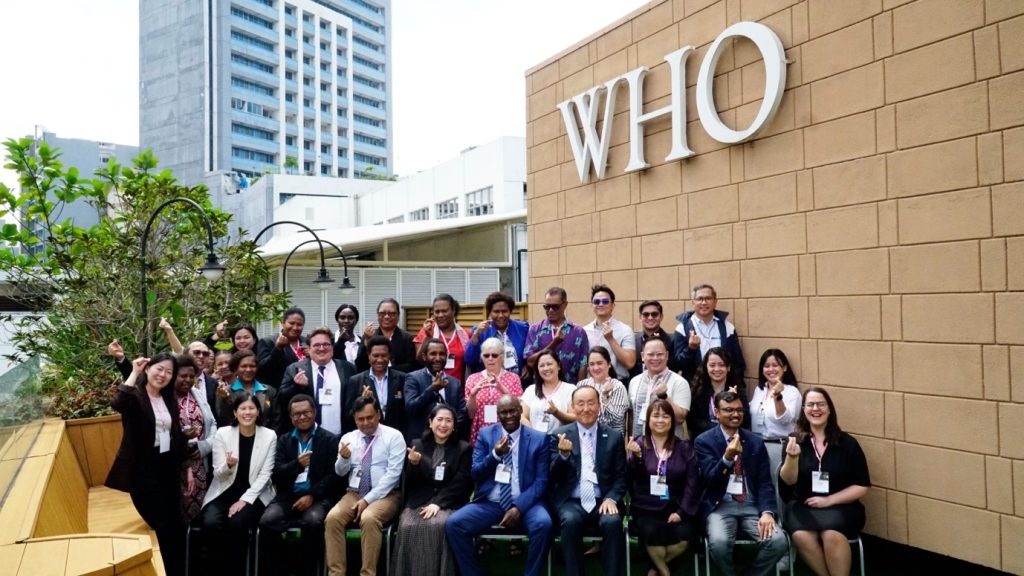
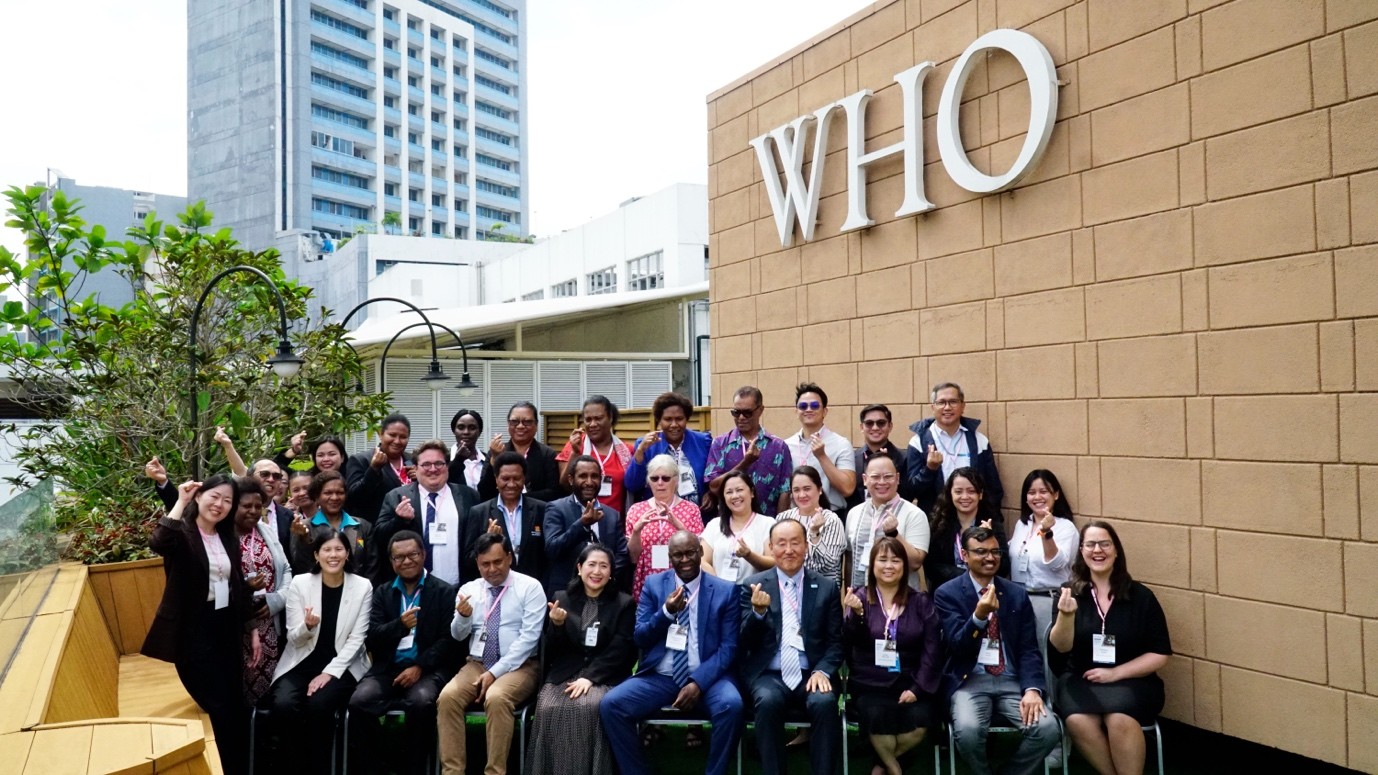
Presentations by Dr Siobhan Fitzpatrick (WHO HQ) and Dr Priscilla Robinson (WFPHA) highlighted the WHO Global Competency and Outcomes Framework for Public Health. The central message was straightforward: education should not be organised around what students need to know, but around what graduates need to be able to do. This represents a significant shift for public health education.
Rather than starting with existing curricula, institutions are encouraged to begin with workforce needs, identify the competencies required to deliver EPHFs, and then design educational programmes that prepare graduates for those roles. The workshop also highlighted that competency-based education extends beyond curriculum content. It requires appropriate assessment methods, practical learning experiences, faculty development, and stronger connections between education providers and employers.
For academic public health institutions, this presents both a challenge and an opportunity. Universities are uniquely positioned to help translate workforce priorities into meaningful educational reforms.
Opportunities for Academic Public Health
One observation from the workshop was that academic institutions were not always fully integrated into national workforce planning discussions. In several country presentations, universities were recognised as important stakeholders but were not clearly assigned roles within workforce development plans. Yet many of the identified challenges including competency development, faculty capacity, curriculum reform, workforce research, and continuing education fall squarely within the expertise of academic public health institutions.
This suggests a significant opportunity for academic organisations to contribute to implementation efforts. Areas where academic public health can provide leadership include:
- Competency-based curriculum development
- Faculty development and educational innovation
- Public health workforce research and workforce intelligence
- Continuing professional education
- Communities of practice and peer learning networks
- Leadership and management training
The Nexus the Workshop Named: The Importance of Partnership
The facilitating team from WHO HQ pushed participants toward a concrete output: not an exhaustive plan, but a clear, presentable roadmap that each delegation could carry home to their ministers and line ministries. What struck me most in the closing session was a word that surfaced repeatedly: nexus. The workshop had begun to articulate something it could not yet fully build, a durable compact between ministry leadership, academic institutions, and professional associations that could outlast any single project cycle. Governments can identify workforce needs and policy priorities. Universities can develop competencies, curricula, and training programmes. Professional associations can support continuing professional development, networking, and advocacy.
GNAPH belongs squarely in that nexus. Throughout the three days, the absence of academic institutions in national implementation plans was a recurring observation, not a passing footnote. Siobhan Fitzpatrick from WHO HQ put it most directly: “We need to think about education as part of the health system, as part of the workforce overall approach.” This is, of course, what GNAPH has been arguing, and it is increasingly what country planners are discovering on their own terms.
The Global Network for Academic Public Health (GNAPH) contributed to the workshop discussions by highlighting the critical role of academic public health institutions in workforce development, competency-based education, and capacity building. As a global network representing academic public health organisations across seven regions, GNAPH can help bridge the gap between workforce policy and educational practice through faculty development, continuing professional education (COPE), communities of practice, and international collaboration.
Looking Ahead
Perhaps the most important lesson from Manila was that strengthening the public health workforce is not simply about producing more workers. It is about ensuring that individuals possess the competencies, skills, and support required to address increasingly complex public health challenges.
As countries seek to implement the WHO Public Health Workforce Roadmap and strengthen delivery of Essential Public Health Functions, academic public health institutions will play a critical role in shaping the future workforce.
For GNAPH, this presents an important opportunity to contribute through competency-based education, faculty development, continuing professional education, and global collaboration. The discussions in Manila demonstrated that the need for academic public health leadership has never been greater, and that GNAPH is well positioned to help bridge the gap between workforce aspirations and workforce realities.