A World in Flames
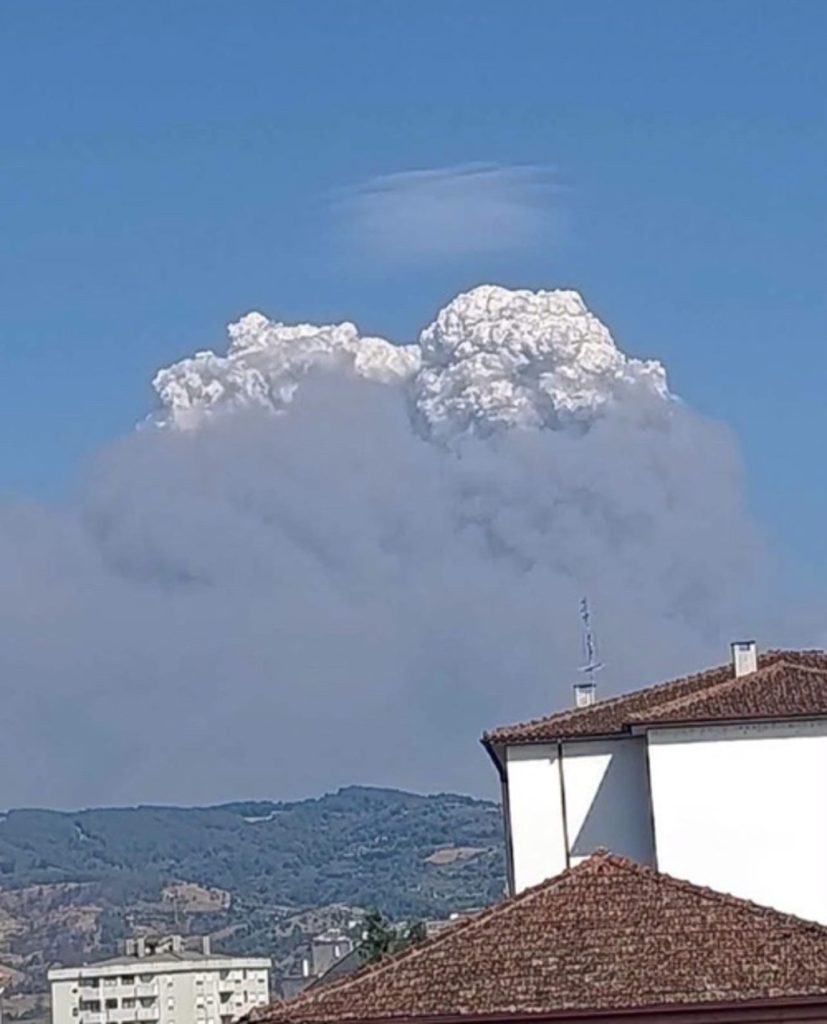
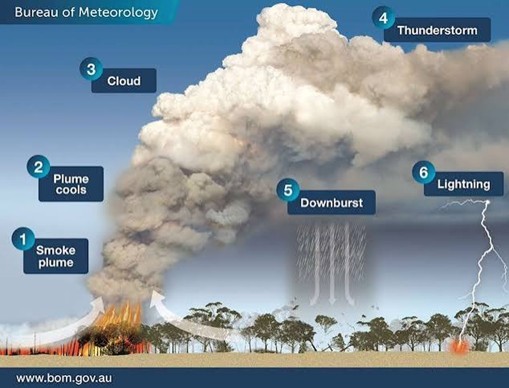
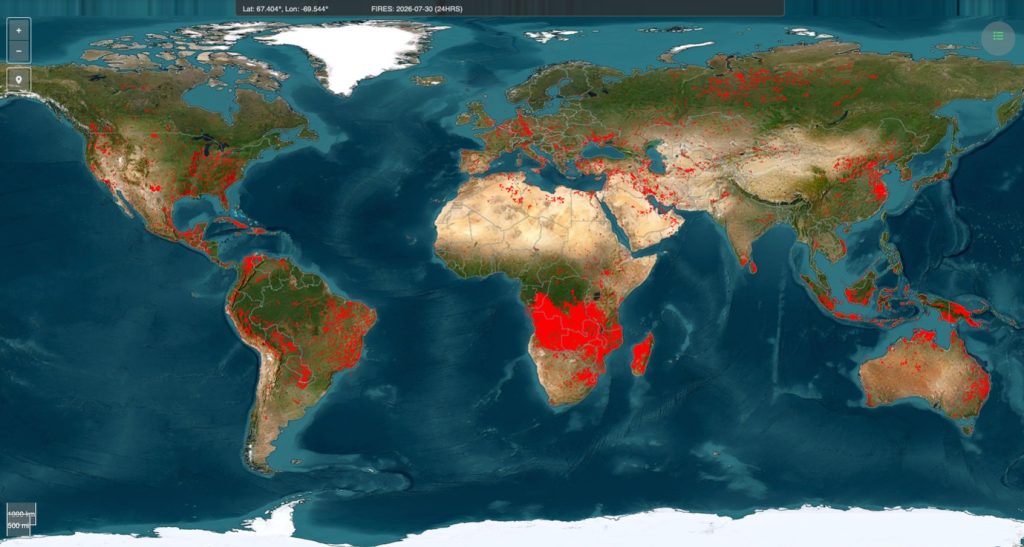
The world is on fire. More than three hundred thousand people in Southern France and Spain have become the latest climate refugees in the last month. They were not included in the International Organisation for Migration (IOM) estimate of 1.2 billion climate refugees by 2050. France, Spain and Portugal have declared level 6 wildfires – wildfires so strong, so powerful, they are generating their own weather – creating fire clouds, pyro-cumulus, with lightning striking, setting off new wildfires, miles from the original site. (figure 1,2)
There have been an estimated 10,000 excess deaths in Europe from the June heatwave on. The fires in Europe, generating so much news airtime, and new fear and suffering for the people affected, are as nothing to the fires engulfing Central Africa and even Siberia. The world’s great green lungs, the Amazon and Central African rainforests and the Arctic Tundra are becoming net exporters of carbon dioxide as the fires expand and the green ecosystems recede. The world’s great bread baskets are overheating and burning, through wildfires in Canada, from Russian attacks in the Ukraine, and dust clouds are engulfing crops, orchards and vineyards.
The human made destruction of insect life, ‘insectageddon’, is now being accelerated by their incineration in wildfires. We are losing pollinators at a rate we cannot comprehend. We should also be prepared for the liberation of animal species, especially rodents and birds from forest habitats, carrying new species of micro-organisms capable of causing pandemics.
The era of polycrisis: ‘a reinforcing cycle of harm’
Global conflicts and genocides proceed unabated without any political will to halt them, ramping up the carbon and other pollutants destroying environment as well as people. We are witnessing polycrisis. A war without a foreseeable end in Iran is adding to fuel, fertiliser and food shortage and creating grounds for some to get rich. Compound the war in Iran with food shortage and the rise of the Super El Nino, and there is the prospect of even greater famine. And even greater speculation on world oil and food prices. The Global Climate and Health Alliance has just published a comprehensive report on the complex interaction of conflicts and climate breakdown, precisely summarised in the title: ‘Climate change, armed conflict and public health: a reinforcing cycle of harm’.
In the UK, shortage of domestic water supplies have risen to joint first place in the national risk register, alongside pandemics. Almost exactly at that moment, London Gatwick Airport ran out of water. UK food supplies are in the hands of four major supermarket chains, vulnerable to global food supply, global food prices, the price of oil, and prone to cyber-attack on computerised control systems. Meanwhile, the US has been hit by its biggest ever cyclospora outbreak, an example of just what public health systems do to protect the public, and how much we miss them when they are not there. Public health systems are being run down in many high-income countries and governments are ill-prepared to respond and protect their people.
A role for public health teachers
Schools and programmes of public health have been slow to update curricula on preparedness, and limited in their recognition of all-risks approaches, response in the era of social media, and now in the era of AI. Interdisciplinary education and simulation has lagged behind, with blue light and environmental agencies.
Professors Henrique Lopes and Paul Barach, in their presentation at the ASPHER Milan Congress on public health education and training, described 9 areas in which public health schools and trainers need to up their game in teaching about public health preparedness and response to the multiple complex disasters we now face:
- Full mapping of each region’s risks
- Action plans for each identified risk type
- Provision of the most up-to-date technology
- Provision of adequate response resources
- Curricula updated to current risks and technologies
- Substantial work on the interfaces with Public Health
- Frequent drills, exercises and simulations
- Time-limited certification for critical-function roles
- Strong production of research
To these I would add multi-agency and multisectoral training and planning, and joint leadership exercises: problems which have multiple causes require multiple, coordinated, interprofessional responses. We should also seek to involve local communities in developing plans and enabling community resources to be activated. An effort to expand the public’s knowledge and ability to respond to the polycrisis is now underway in the UK with the National Emergency Briefing.
If schools and programmes have much to do, so too do national governments. I would question the level of preparedness of most governments when it comes to the kinds of disasters we are witnessing now. Particularly as so many high countries continue to ‘deprioritise’ their public health and protection infrastructure. We were told in the years before the Covid-19 pandemic that the USA and the UK were well prepared. That proved not only to be untrue in terms of how prepared health services were, but it was also true because the measures used to judge preparedness failed to understand the political unpreparedness of many countries and the ‘talk-to-the-hand’ ignorance of many populist governments before 2020.
We live in a desperate and tragic time; when people and planet need protecting most, our political leaders are least willing and least able to organise the global collaborations and the global responses needed. Where our leaders need most to recognise the need to work together, they see only opportunities to line their own pockets and enrich their friends. I will reflect more on this bankruptcy of aspiration in my next blog, in which I will give some reflections on a summer of geopolitics, trust and courage in public health. It has never been more sadly true that ‘Where there is no vision, the people perish’.
Acknowledgements
Thank you to Professor Henrique Lopes, Nova University Lisbon, Professor Paul Barach, Thomas Jefferson, and Dr Farhang Tahzib, GNAPH law and ethics lead, for helpful conversations and references.