shape
shape

Decolonizing public health in the Cape Town World Congress of Public Health: LAND

Decolonizing public health in the Cape Town World Congress of Public Health: LAND

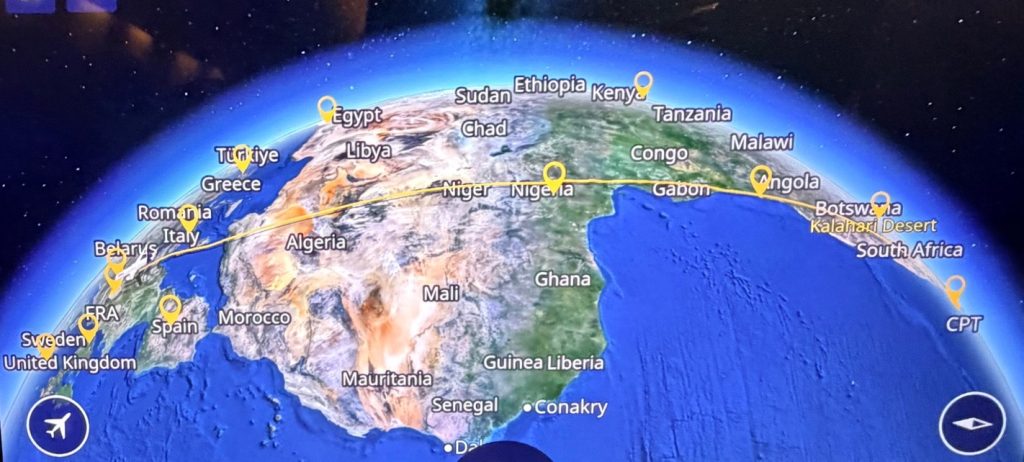
Figure 1: A different view of the continent of Africa: flying from Europe to Cape Town.

Presidents reports from the World Congress of Public Health, Cape Town, September 6th– 9th 2026

The World Congress of Public Health was staged in Cape Town, South Africa this year, September 6th-9th. The congress was well served with leading thought and action, particularly from the southern hemisphere and from indigenous health authorities. A good summary of the congress proceedings has been published by the World Federation of Public Health Associations under the call ‘What Cape Town asks us to change’. GNAPH was prominently engaged in the congress. The call of the conference was Health Without Borders: Equity, Inclusion, and Sustainability. A major theme was decolonising public health.

HOW BIG IS AFRICA? 

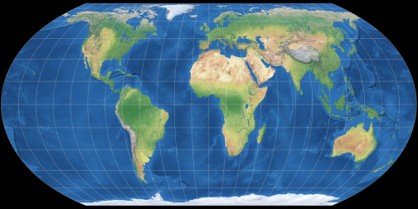
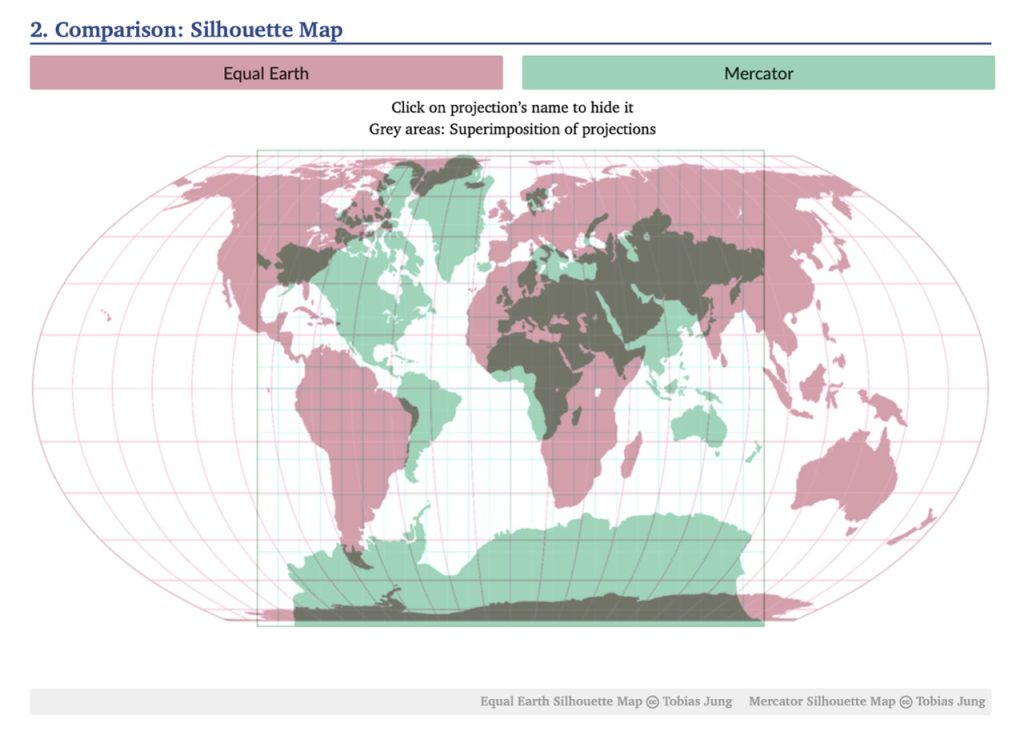
Such a coincidence then, that in the week before the congress, the United Nations had resolved by 164 votes to 1, to recognise that Africa is a much bigger land mass than previously shown in maps of the planet. You can fit the United States, China, India, Japan, Mexico and much of Europe inside Africa — and still have land left over.  How could anyone object to the science and geography of this? …. Or even fail to recognise the sheer magnificence of it, when you look at the extent and grandeur of the African continent. I watched, in awe, on the flight-path screen on the flight from Europe. (Figure 1) Maps are significant not just to help travelers find their way in the world, but to convey political and historical meaning, and belonging: where do we fit in?  So, it was a significant consideration and a symbolic United Nations statement to redefine Africa on the world stage and a step away from western conceptions of what the world looks like. Figure 2 shows the Equal Earth projection based on areas of land of the planet. Figure 3 shows Equal Earth in silhouette with the Mercator projection.

Figure 2 The Equal Earth projection 2018
Figure 3: Comparing Equal Earth with Mercator projections: Maps. Tobias Jung (creative commons licence) Here

LAND

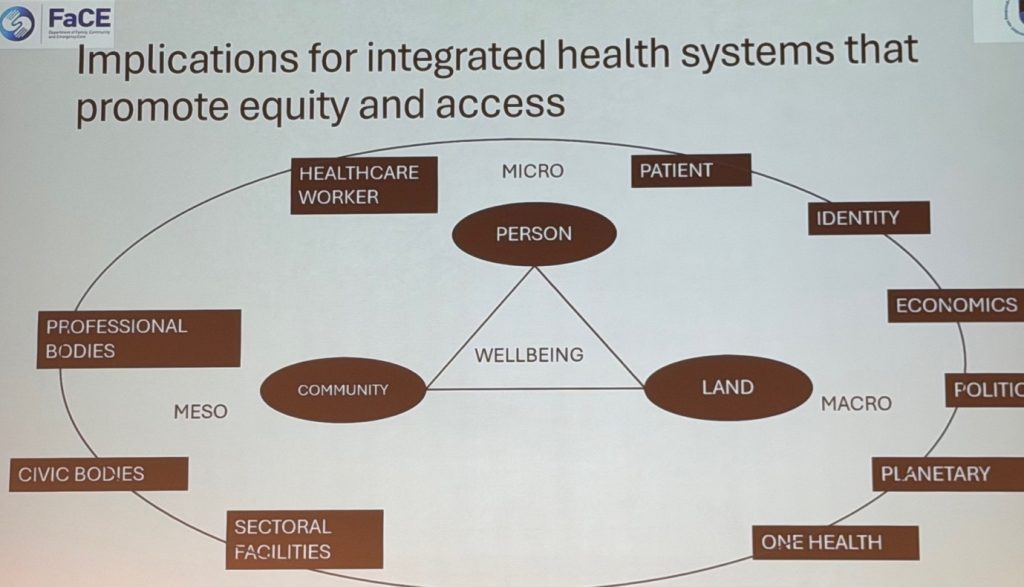
Land is a key element of Ubuntu, the African philosophy, which says ’We are, therefore I am’. It is a theme shared in many indigenous belief systems. Professor Tasleem Ras presented the concept of African communitarianism; a philosophical and moral framework emphasizing that a person’s identity, humanity, and well-being are fundamentally intertwined with their relational network and community. He illustrated this with a triad of individual, community and land, neatly juxtaposing individual, population and planetary health approaches needed to protect and improve health environment and community (figure 4)

Figure 4 Slide from: Prof Tasleem Ras, Department of Family, Community and Emergency Care at University of Cape Town, at WCPH, Primary care and public health plenary September 7th 2026.

Western conceptions of ownership have destroyed a healthy relationship between land and people.  George Monbiot analysed this in his great call for ‘Private sufficiency, public luxury: land is the key to the transformation of society’. Western ideas of ownership of land became rooted in the philosophy of John Locke, which justified or encouraged concentration of land in a few hands. This in turn, supported colonialism and genocide of indigenous peoples, leading us to the sorry state in westernised industrialised countries today. We value only what is in our own dominion and neglect the space we share. In my own country, less than 10 % of land is in public ownership…During the pandemic, hordes of people crowded parks and beaches looking for their entitlement to 2 metres of personal space and activity- only to be embittered and disappointed ….

The idea of owning land was, and still is, as alien to indigenous people’s thinking, as the idea that someone might own the air we are breathing. The ‘extractive mentality’ that appeared with the industrial revolution meant landowners came to regard the rocks below their land as their property too.  Even but a few years ago, as English folk song writer Ewan MacColl sang about the rights to roam on England’s Pennine Moorlands, in the song’ the Manchester Rambler’: ‘no man has the right to own mountains, any more than the deep ocean bed’.  It is not unimaginable that humans don’t have to own the land, and not unimaginable that fairer and shared use of land cannot be achieved. 

Land is an element missing from western public health competence- people work with homeless people, they work on housing, but do they address the fundamental right of people to have a space to live, to grow food, to cultivate their family, and their community? And do we in the west understand the worth of land? I am still waiting for my lecture on soil science, on the need for pollinators to protect our crops, and the value of ecology in keeping biological, and human social systems going……

In the wealthy western world, we are only beginning to understand what land means for public health… we are living in and around phantom cities ….. we have no respect for land, and no understanding of how we must value the turf we walk on, the concrete we give over to vehicles, and the soil we grow our food on.

LOOK EAST LOOK SOUTH

Throughout the conference, people will have heard me saying that we should look east and look south for the best practice in public health. That is what I believe. But I also recognise, in trying not to colonise health, I am guilty of adding to it…. 

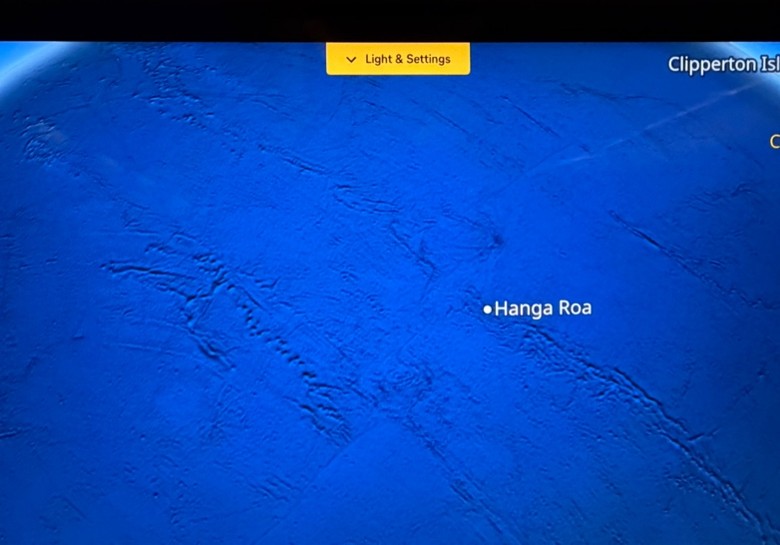
I grew up with Mercator’s projection of the Earth, and the Greenwich Meridian made me centre of the Earth! Modern digital technologies enable us to look at the world from different perspectives The planet is round! What a revelation!  …  for a public health expert in Hanga Roa, where would looking east or south help?  

Figure 5. The world from Hanga Roa.

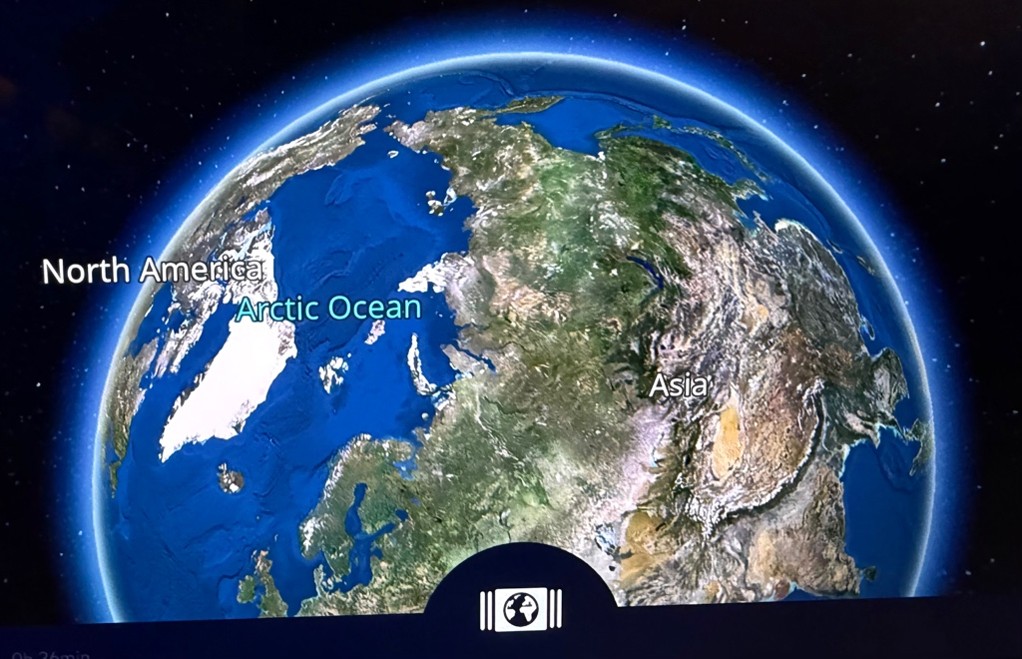
My ‘East’ and ‘South’ are geopolitical, not geographical. In the new world of geopolitics, we must learn to look at our planet from different perspectives. Otherwise, we will not notice the loss of ice in the Arctic, and the new Northeast passage opening. (Figure 6) And we need to re-learn respect for all our fellow humans on the planet, otherwise there could be 1.2 billion extra climate refugees by 2050…We live in times where international law and global governance are unfashionable – institutions and collective efforts, to be dismantled. And yet, with the rise of uncontrollable AI agents, extreme environmental disasters and conflicts, efforts to extract minerals from international waters and the poles, grotesque inequalities in individual wealth and always a new infectious disease incident around the corner, we need our global institutions to be strengthened and empowered.

We need international law for all our survival. As David  Patterson a lawyer from Groningen University working on ASPHER’s  climate and health law and ethics course said to me in the congress, “If you came here by plane, you only got here because international law enabled air traffic control to get you here..…  “ 

Figure 6 The new north east passage opening up as Arctic Ice contracts

The opinions expressed in this post are solely those of the author and do not necessarily represent the views of GNAPH or its members.