Presidents reports from the World Congress of Public Health, Cape Town, September 6th– 9th 2026
The World Congress of Public Health was staged in Cape Town, South Africa this year, September 6th-9th. A good summary of the congress proceedings has been published by the World Federation of Public Health Associations under the call ‘What Cape Town asks us to change’. GNAPH was prominently engaged in the congress. The call of the conference was Health Without Borders: Equity, Inclusion, and Sustainability. A major theme was decolonising public health. This is the second of my reflections on indigenous health wisdom. My first, was about land.
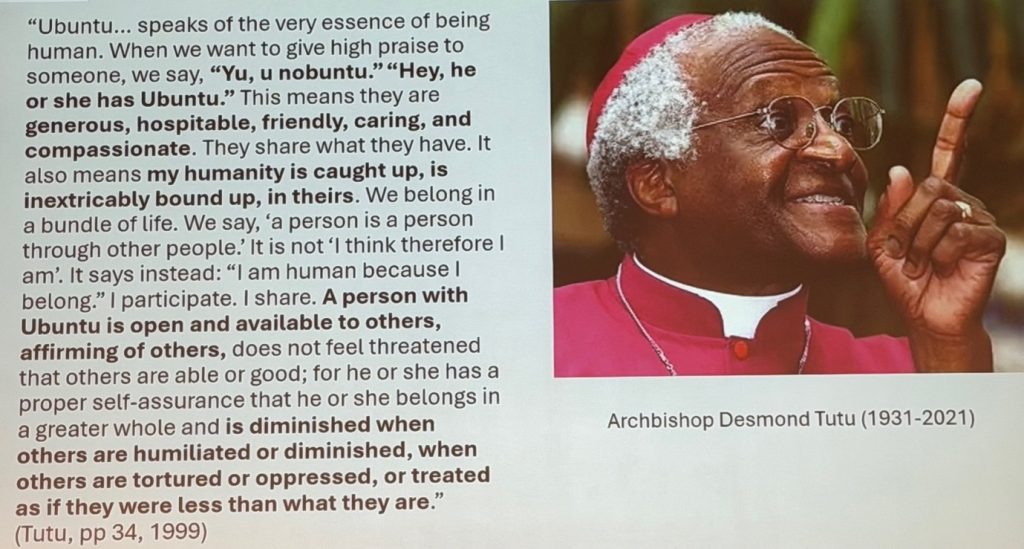
UBUNTU
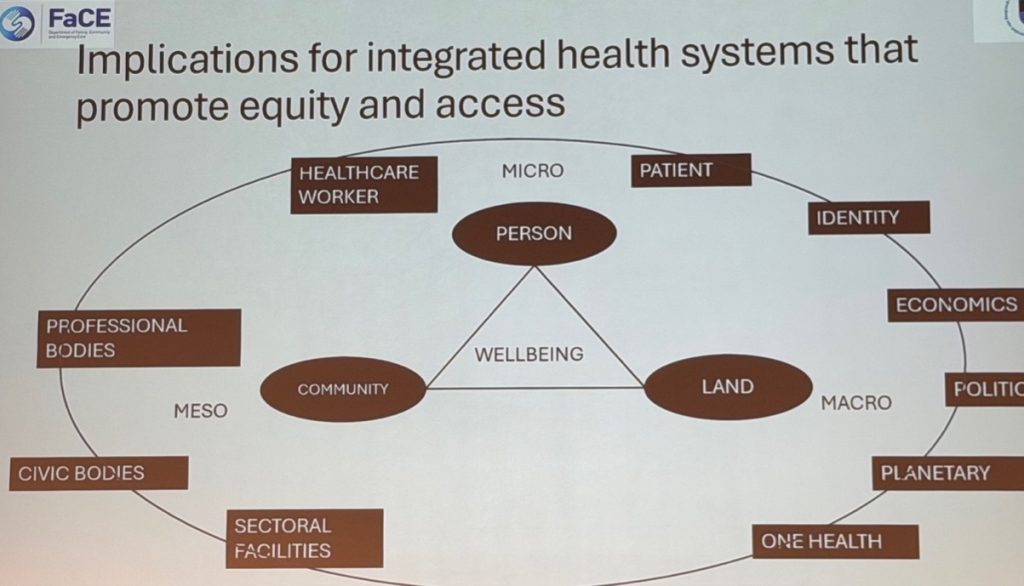
A strong theme of conference was the African philosophy of Ubuntu, which summarises in a line as ‘I am because we are, we are, therefore I am’. Professor Tasleem Ras of the Department of Family, Community and Emergency Care at University of Cape Town, compared western notions of bio-ethics –with how Ubuntu serves public health philosophy and action. Western bio-medical ethics has tended to reflect the pervading neoliberal political norms which are individualistic, see personal freedoms as paramount, are transactional, extractive, exploitative, competitive, and resistant to collective protections and interventions. Ubuntu contributes to a concept of African communitarianism in which a triad of individual, community and land, neatly juxtaposes with individual, population and planetary health approaches needed to protect and improve the health of our global society.
ANCESTORS
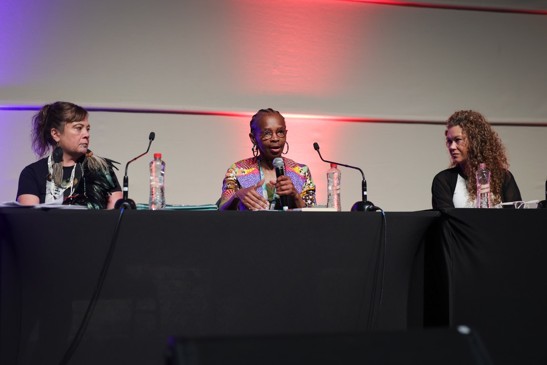
Professor MMatshilo Motsei from the Afrika Ikalafe Pluriversity summarises Ubuntu as ‘oneness of community, wholeness of existence’. Speaking in the plenary on decolonising health. She described her organisation as a pluriversity – celebrating multiple ways of knowing, including re-membered indigenous African knowledge for land-based healing, learning and living. Her presentation to congress, ‘Womb-Birth-Lineage-Land’ described an indigenous knowledge architecture for decolonising maternal health. She acknowledged the place of bio-medical and technological intervention in childbirth: if birth is only the biological outcome, a 10/10 APGAR score doesn’t cover whether the mother was helped? Whether the baby was received with honour? Was the placenta accepted? Were the gifts of lineage, the histories, the inheritances, the talents, the personal gifts of the ancestors valued. Her drive was to reclaim the sacred, the awe, the recognition and expectation for the new life, but also respect for the elders and the ancestors who have gone before- to honour life in continuity. There is the maxim, popularised globally by Oxfam, that ‘it takes a village to raise a child’; another maxim offered was ‘family is who cooks together’. In western cultures we appear to have lost this ability to recognise collective responsibility for the health and spiritual growth of our children. Clinical maternity services in high income countries are failing to answer the needs of parents, mothers and newborns; there is a litany of maternity service disasters which testify the failings of biomedical and technological intervention of themselves. Organisational and cultural problems recur, including failure to listen to women and families; fragmented communication between professions and hospitals; bullying, racism or dismissive institutional cultures; inadequate attention to maternal mental health and suicide. There is much to be learned and re-learned.
HE ARA WAIORA – water-life Maori well-being
Associate Professor Sacha McMeeking, of the Shifting the Dial Impact Lab, also in the decolonising plenary, described herself as from 14 generations of migrants who had navigated the oceans by the stars from warm climates to the cold extreme of Aotearoa. She described indigenous thinking as problem solving, describing herself as an 8th generation systems thinker, before it had ever become fashionable in Western healthcare management theory.
Configuration thinking and configuration practice are natural to how indigenous people can find the way to bring the harmonies across different causal mechanisms, in the modern context, this can lead to commissioned multiple interventions impacting on multiple outcomes; by doing small things, producing multiple and wide-ranging benefits. She illustrated that with the experience of Māori communities when Covid-19 arrived in Aoturarea. Communities configured all the determinants in their own way and the system got out of the way; in the first wave, the community protected itself, achieving lower rates of Covid-19, exceeding expectations.
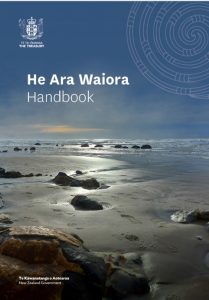
She brought to congress the He Ara Waiora Wellbeing strategy of Aotearoa/New Zealand. (figure 4) It is the first time a government has brought forward a wellbeing strategy as an economic prosperity strategy, part of the NZ Living Standards Framework and certainly the first time one has been based on systems of indigenous belief. It is extraordinary that it arose from the Treasury, and from a Tax working strategy group, with an aim to create more future facing taxation provisions. The one page at a glance version of the He Ara Waiora strategy can be found here. And the main highlights are in the Box. In Ha Ara Waiora, the ends, what is important for wellbeing, are intrinsically related to the means, the principles of how to get to wellbeing. There is no single point solution but a seamless inter-relationship in which upstream and downstream interventions are equally valued and acknowledged.
BOX: Ends and means of HE ARA WAIORA
ENDS – what is important for waiora Wellbeing ‘water’ ‘life’
Wairua (spirit) is at the centre to reflect that it is the foundation or source of wellbeing. Values, beliefs and practices related to wairua are essential to Māori conceptions of health and wellbeing. The wellbeing of Te Taiao (the natural world) is paramount and inextricable from human wellbeing. There are responsibilities and obligations to sustain and maintain the wellbeing of Te Taiao. Te Ira Tangata (the human domain) encapsulates human activities and relationships. People (tangata) and collectives (kāinga) thrive when they: have a strong sense of identity and belonging (mana tuku iho); participate and connect within their communities, including fulfilling their rights and obligations (mana tautuutu); have the capability to decide on their aspirations and realise them in the context of their own unique circumstances (mana āheinga); have the power to grow sustainably, WAIORA intergenerational prosperity (mana whanake).
MEANS – principles for how to approach the creation of waiora (wellbeing)
Kotahitanga means working in an aligned, co-ordinated way across the system and in partnership with business, communities, iwi and whānau. Tikanga means that decisions have to be made in accordance with the right processes. This includes working in partnership with the Treaty partner. Whanaungatanga means fostering strong relationships and networks, both through kinship and shared interests. Manaakitanga means maintaining a focus on improved wellbeing and enhanced mana for all New Zealanders. It means supporting each other and demonstrating an ethic of care for our fellow New Zealanders. Distributional analysis is important to identify and address inequities. Tiakitanga means guardianship, stewardship (e.g., of the environment, or other important processes and systems that support wellbeing).
Aoturarea/ New Zealand government Treasury

SANKOFA
I have always felt the word ‘’hope” was weak and unhelpful, diverting people from acting…. But Professor Tollolah Oni, of Cambridge University reclaimed ‘hope’, describing it as a verb, not a sentiment, and an action. She drew our attention to the mythical African Bird, the Sankofa, which looks back, while moving forward.
Like Dr McMeeking, she stressed the value and strength of indigenous thinking providing relational leadership, and systems thinking; our need is for systems for health, not just health systems. Community intelligence and experience is vital. Who frames the question, shapes the answers, and shows us which knowledge and which futures are then possible; finally, who frames the question determines from whom the answer makes demands. She called for sustainable systems capable of maintaining institutions, durable ecosystems and intellectual coalition building infrastructure – lasting ‘beyond projects or programmes’ everyone graduates to public health thinking as they get old. Ubuntu training means to train many collectively, not single individuals and professions in isolation: ‘we sit under the tree until we agree’.
‘Objects of inequity, or romanticised knowledge holders.’
Sacha McMeeking suggested that indigenous peoples were most often ‘objects of inequity, or romanticised knowledge holders.’ She urged the public health community congress not to measure people by deficits, but by assets, strengths and values. The original inhabitants of the Cape, the Khoisa, go back 200,000 years. Indigenous mindsets have preserved communities and stewarded environments and ecosystems in many parts of the world, for at least 50,000 years. Colonising empires have threatened these communities and their environments, and all but destroyed them in less than 300 years, stealing land, committing genocides, creating slavery, amassing riches for a few and poverty and degradation for the masses.
We must not only learn from indigenous beliefs about health, societal organisation and environmental stewardship. Today, as in history, indigenous people are on the front line of battles for better health and communities for all. We are seeing these conflicts being fought all over the globe- whether it is against fossil fuel interests that undermined the Aboriginal rights referendum in Australia, in 2023; or in the Fossil fuel companies drilling for oil and destroying local communities, and livelihoods from Alaska, to the Gulf of Mexico to the Nigerian Ogoni homelands of Ken Saro–Wiwa, or the destruction of the Amazon by Cargill to create monstrous monolithic soy bean cultivations, to feed the beef cattle of the ranchers. These conflicts are the geopolitical face of public health. Is the public health community ready to join those fights?
The opinions expressed in this post are solely those of the author and do not necessarily represent the views of GNAPH or its members.