The World Health Summit 2026 – Global Network for Academic Public Health gets stuck in!
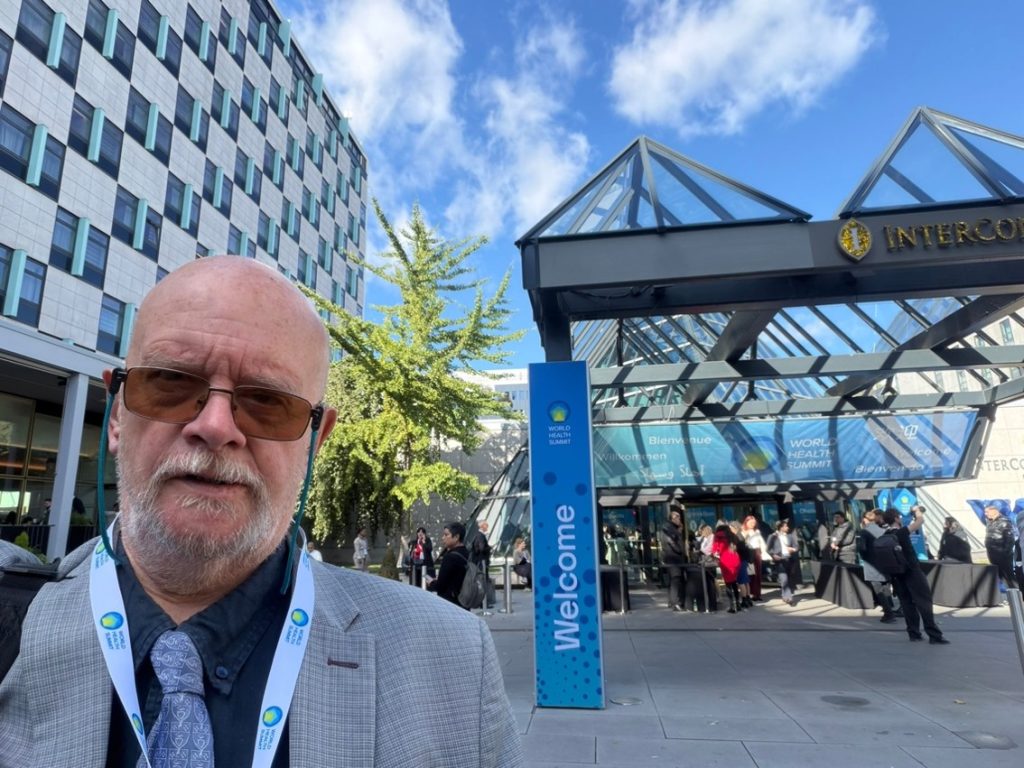
Laura Magana and John Middleton (above-outside the Intercontinental Hotel, Berlin) attended the World Health Academic Alliance, and the World Health Summit, on behalf of the Global Network of Academic Public Health in Berlin 10–13 October. The World Health Summit adopted the theme “From Crisis to Resilience: Innovating for Health.” The central thrust of the World Health Summit was that innovation must extend beyond technology to financing, governance, partnerships, and service delivery, enabling health systems to anticipate shocks while protecting essential services.
The most tangible financing announcements focused on women’s health, stillbirth prevention, maternal and child-health commodities, and antimicrobial resistance. Alongside these, major reports addressed interconnected global threats, declining trust in science, emotional wellbeing, and weaknesses in pandemic-risk monitoring. The Summit’s unifying message was to connect sustained investment, country ownership, public trust, and measurable delivery, rather than treat resilience as a technology or emergency-response agenda alone.
The closing press release recorded more than 4,000 on-site participants from 130 countries and territories, more than 400 speakers, 20 ministers and state secretaries, 76 sessions, and 75 side meetings.
Major WHS commitments and reporting
The 2026 Summit produced several major financial commitments and research launches. Bangladesh and the European Investment Bank announced plans for a €250 million programme to improve women’s health while strengthening district hospitals and critical-care.
The Gates Foundation and Wellcome Leap committed US$100 million to Uzima: A Stillbirth Prevention Program, which aims to show that stillbirth rates can be reduced by half within a decade in selected countries. Germany also pledged €10 million to improve access to family planning and maternal, newborn, and child-health products.
Other 2026 outcomes included US$21 million from the Netherlands, Sweden, and Norway for the Antimicrobial Resistance Multi-Partner Trust Fund, supporting country-led action in low- and middle-income countries. The Nairobi Declaration 2026, developed with Africa CDC, the WHO African Region, Aga Khan University, and WHS, affirmed that Africa’s health future should be shaped by African priorities, evidence, and leadership.
Global threats and trust: Crucial Lancet and Wellcome reports
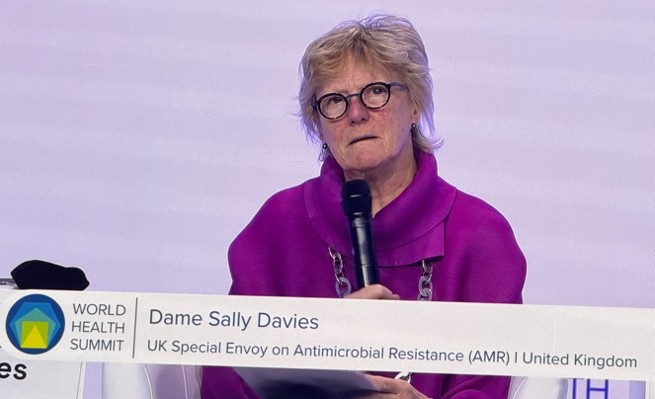
The Lancet Commission on 21st Century Global Threats to Health identified malicious use of artificial intelligence and nuclear conflict as two threats with the potential to cause human extinction. Its message was that health, security, climate, finance, and technology decisions must be treated as interconnected risks to human survival. The novelty of what it reported was not the final and existential threats, but the tragic and grinding reality of disability adjusted life years lost by poverty and obesity. No – it hasn’t included climate breakdown in the existential threats – because the authors believe we can avert this impending disaster by our actions… however, I think they should have included climate breakdown because the disability adjusted life years lost are bad now; they wont grow uniformly, they will accelerate very soon. Professor Dame Sally Davies, former Chief Medical Officer for the United Kingdom challenged biomedical assumptions of causes of obesity, asking where was the recognition and modelling of commercial determinants of obesity.
Despite some of our reservations, the Lancet and IHME global health threats report is a vital addition to the armoury of evidence about the global burden of illness and the global risk of disease and destruction. It will evolve, it will develop. GNAPH will encourage its use amongst our members.
Trust in science
The Wellcome Global Monitor 2026 found that public trust in science has fallen below pre-COVID-19 levels. The survey covered more than 140,000 people across 140 countries, with the steepest declines among people experiencing financial hardship—highlighting the need for transparency, openness, and science that responds to people’s lived realities.
However, on the bright side, we should recognise that there is still more trust in science than in almost any other sphere of public discourse… if politicians could command 70% trust, they would be very happy….but no one must be complacent in the context of geopolitical populist politics!
Emotional health?
Gallup’s State of the World’s Emotional Health 2026 report found a complex relationship between social-media use and wellbeing. Rather than showing that more time online is always harmful, its findings varied by age, time spent online, country, and the specific emotion being measured. But we should all be very cautious of the meaning of these findings- at best thewy show things haven’t got worse over 2024,2025. More work and analysis is needed to understand the apparent decline of mental health, especially in young people shown very starkly last year in the 2023 Global burden of disease study. Perhaps it is wrong to attribute all damaging effects on young minds to social media, and more necessary to focus on real and understandable existential threats like climate breakdown, hybrid war and AI….
Pandemic preparedness
The Global Preparedness Monitoring Board presented its final report, Getting Ahead of Pandemic Risk: Insights from 8 Years of Global Preparedness Monitoring. It reinforced the need for stronger surveillance, financing, accountability, and coordinated systems before—not after—the next pandemic. The world needs much greater resource in the broader pandemic prevention agenda including laboratory networks, surveillance, trained health workers, rapid data sharing, supply chains, and trusted local actors.
Health and Peace Practitioners’ Alliance
This year’s statement from the World Health Academic Alliance published in the Lancet in October, was a powerful statement about the concerns of health workers across the world on the need for peace, if health is to be achieved. There can be no health without peace, and no peace without health. Furthermore, the statement restates the need to protect health workers and to condemn the targeting of health workers. A significant side meeting at the congress developed these themes and confirmed the work of health communities in peace promotion as a major priority for our global healthcare and public health community
Concluding thoughts
There is reason to take forward a progressive global health agenda which can save lives in millions. Health systems must become more resilient, locally led, and future-ready rather than merely reactive during emergencies.
The Global Network for Academic Public Health is an associate member of the World Health Academic Alliance. The Alliance is the brains and the engine of the World Health Summit (in my humble opinion). Brains, intelligence, leadership, strategy, these are what leads and directs the World Health Summit. The summit is the tool by which a vision for better health is delivered. Because ‘where there is no vision the people perish.’
We believe the World Health Academic Alliance and it’s public facing event, World Health Summit, is crucial for us to be involved in. We believe we have benefited greatly from our involvement in the Alliance. We have been drivers of the WHS 2026 Lancet statement on the role of health services in peace and conflict. We have also staged Global webinars with the Global Burden of Disease Team. Our members were in Nairobi for the Regional WHS meeting in April 2026. Their efforts produced major strategic benefits for public health in Africa, as shown by the Nairobi declaration and the Accra Declaration. Our Asia Pacific members will be in Hong Kong in May 2027, supporting and developing the Regional congress- but with the objective of developing public health teaching to improve and protect public health in East Asia.
Recent election results around the word – in Hungary, in Serbia, in Brazil, and most crucially in the USA mid-terms, suggest that we have reached a peak in the populist neoliberal bubble. It seems that policies to improve basic living standards for all are no longer an outlandish and somehow extreme idea. We can argue for basic standards of housing, environment, clean water, clear air, clean soil and food; we can argue for universal and free access to education and health care for all. The future is bright- the future is public health!
The opinions expressed in this post are solely those of the author and do not necessarily represent the views of GNAPH or its members.